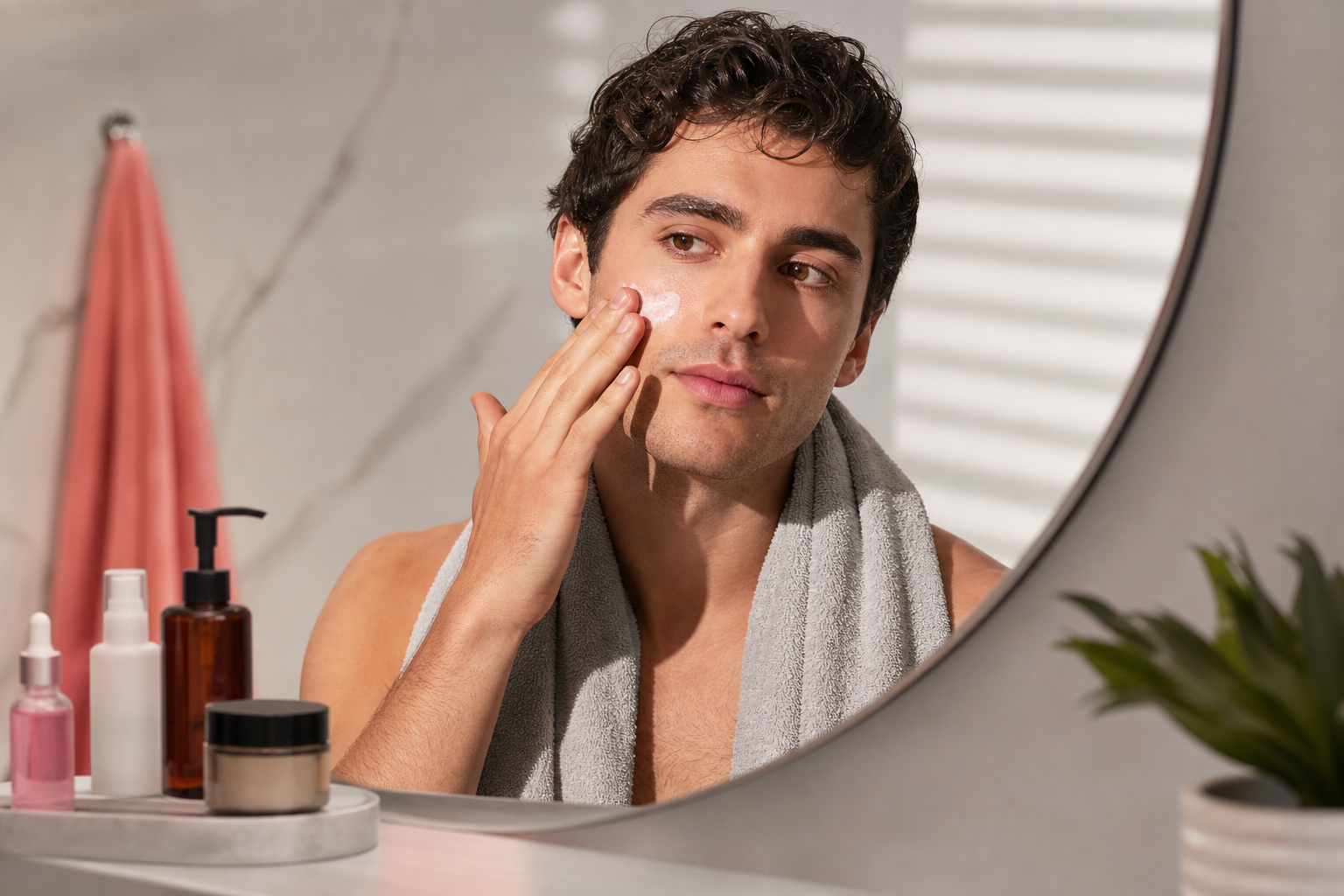
How to Build the Best Men's Skincare Routine: A Simple, Science-Backed Guide
Diagnose Your Actual Skin Type Before You Buy Anything
You've heard conflicting advice: some routines demand 10 steps, others claim one bottle does everything. Meanwhile, your skin is oily by noon, tight after a shower, or breaking out for no reason. The problem isn't that skincare is complicated — it's that generic routines ignore what your skin actually needs.
The best men skin care routine isn't a brand's marketing tier or a 12-step Korean ritual scaled down. It's a science-backed framework — cleanse, moisturize, protect daily, with optional treatment — that adapts to your skin type, not a sales funnel. According to the American Academy of Dermatology, every legitimate skincare recommendation starts by identifying skin type first. Skip that step and every product purchase becomes a guess. And the stakes go beyond appearance: the AAD reports that men over 50 have a higher risk of melanoma — the deadliest form of skin cancer — than the general population. That makes the routine you build today a prevention tool, not a vanity project.
Table of Contents
- Diagnose Your Actual Skin Type Before You Buy Anything
- The Three-Step Foundation Dermatologists Actually Recommend
- When to Add a Fourth Step — Choosing Targeted Treatments
- Routine Assembly — Layering Order, Timing, and Clash Detection
- Tailoring the Routine to Your Primary Concern
- Your Personal Routine Build Checklist (30-Day Plan)
- FAQ: Common Questions Men Ask About Skincare Routines
Diagnose Your Actual Skin Type Before You Buy Anything
Most men diagnose their skin by one signal: shine. If the forehead looks reflective by 2 PM, the verdict is "oily" — and out comes the strongest foaming cleanser on the shelf. That's where routines go wrong.
The American Academy of Dermatology defines five distinct categories: sensitive (stings or burns with products), normal (clear, non-reactive), dry (flaky, itchy, rough), oily (shiny and greasy), and combination (oily T-zone, drier cheeks). Each demands a different product texture and ingredient profile. Critically, there's a sixth state that isn't a "type" at all — dehydrated skin. Dehydration is a temporary condition where the skin lacks water (not oil). It shines AND feels tight. Men misread this as oily, then strip it with harsh sulfates, which damages the barrier and triggers more oil production. The cycle accelerates.
Here's how to diagnose properly in 60 seconds. Wash your face with a mild cleanser and lukewarm water — the AAD specifies lukewarm because hot water dries skin. Pat dry. Wait 30 minutes with absolutely nothing applied. Then observe: Where is the shine? Where is the tightness? Does anything sting? Are pores visible in the T-zone only, or everywhere?
| What You Observe (30 min after washing) | Likely Skin Type | Common Misdiagnosis | What Your Skin Actually Needs |
|---|---|---|---|
| Shine across forehead, nose, chin; visible pores; no tightness | Oily | — | Non-comedogenic, oil-free formulas |
| Tight or flaky cheeks, dull look, no shine | Dry | "Normal" | Emollient moisturizer, no hot water |
| Shine in T-zone, tight or flaky cheeks | Combination | "Oily" | Different textures by zone |
| Shine AND tightness everywhere | Dehydrated (not a type) | "Oily" | Hydration, gentle cleanser, barrier repair |
| Stinging or redness after most products | Sensitive | "Acne-prone" | Fragrance-free, minimal ingredients |
| No tightness, no shine, no reaction | Normal | — | Maintenance routine, prevention focus |
Most men treating "oily" skin are actually treating dehydrated skin — and harsh cleansers make it worse. The tell is tightness, not shine alone.
The misclassifications carry real consequences. If you're oily-but-tight and treat it as oily, you'll dry out further. If you have combination skin and use the same product everywhere, the T-zone stays greasy while cheeks flake. Combination skin specifically benefits from texture-splitting: a gel cleanser concentrated in the T-zone, a cream moisturizer weighted on the cheeks. Sensitive skin is its own trap — the AAD warns that "unscented" products may still contain masking fragrances designed to neutralize raw ingredient smells, which can irritate reactive skin. The label you want is fragrance-free, not unscented.
Once you've locked your type, every downstream choice — cleanser texture, moisturizer weight, whether to layer in actives — flows from it. Tools that pair your skin type with detailed ingredient analysis can flag products that conflict with your profile before you spend $40 on the wrong serum. But the diagnosis comes first.
The Three-Step Foundation Dermatologists Actually Recommend
Across every credible source — the AAD, board-certified dermatologists on video, cosmetic chemists, even mainstream brand education — the same three-step minimum keeps appearing: cleanse, moisturize, protect. According to Nivea's routine guidance, this trio plus periodic exfoliation handles the foundational needs of most men's skin. Anything beyond is optimization, not foundation. Build this layer correctly and you've covered the majority of what determines whether your skin improves over the next six months.
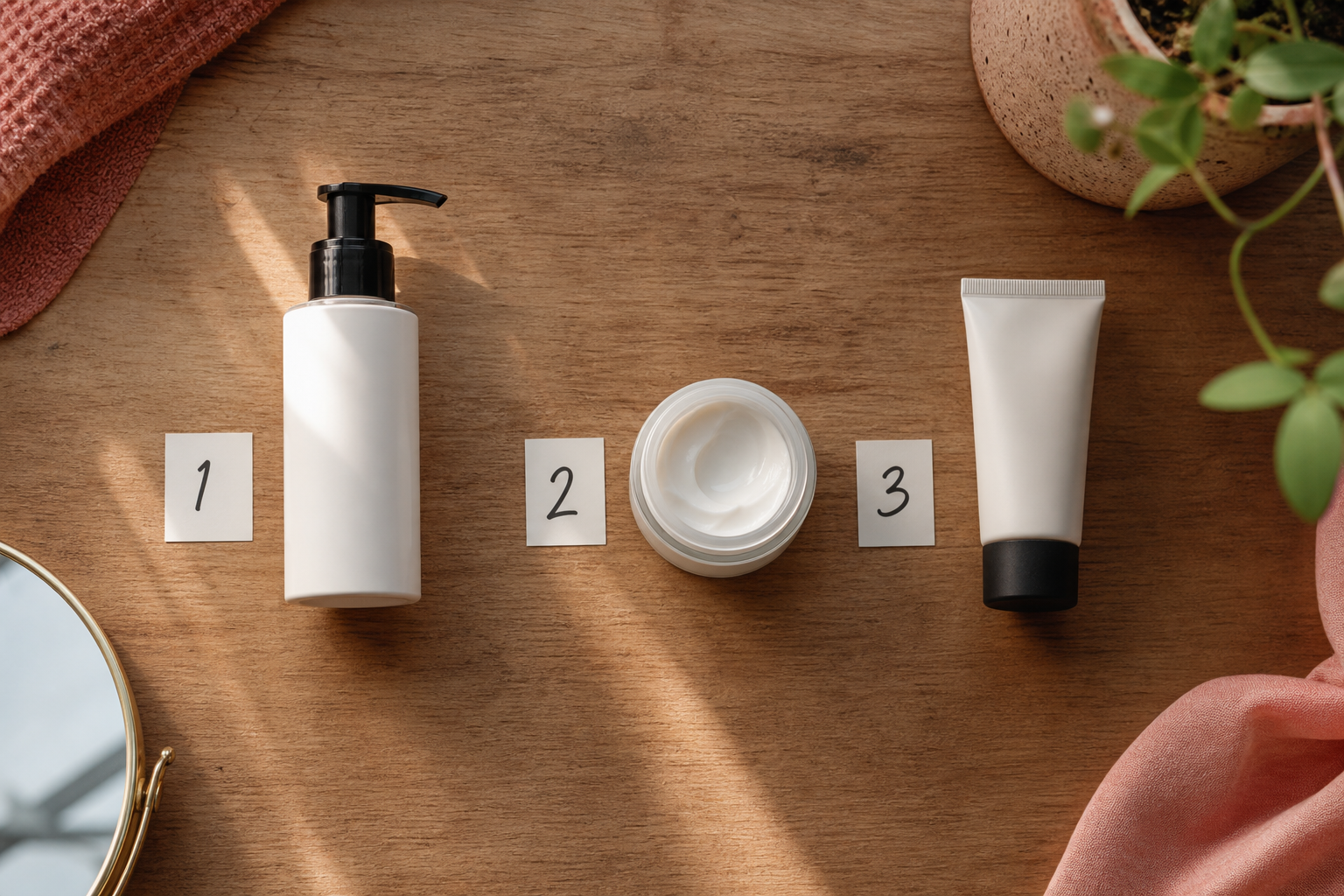
Step 1 — Cleanser (AM & PM)
The AAD recommends cleansing twice daily with a mild facial cleanser and lukewarm water. The morning wash removes overnight oil and sweat. The evening wash removes sunscreen, environmental debris, and the day's accumulated grime. Skip either one and you compromise the routine.
The most common men's mistake isn't choosing the wrong cleanser — it's choosing no cleanser at all. The AAD explicitly warns that regular bar soap often contains harsh ingredients that dry the skin. The body soap sitting in your shower is formulated for a body, not a face. Switch.
Texture by skin type:
- Oily or combination: gel or foam cleanser
- Dry or sensitive: cream or lotion cleanser (no foaming agents)
- Normal: gentle gel cleanser
A board-certified dermatologist behind the popular YouTube men's routine guide makes a point worth absorbing: cleansers should be simple and inexpensive. They sit on your face for 20 seconds before getting rinsed away — no active ingredient has time to do meaningful work. Spend your skincare budget on moisturizer and SPF, which stay on the skin for hours.
Application: 20 seconds, fingertips only, no scrubbing, lukewarm rinse, pat dry — don't rub. Rubbing with a towel creates micro-tears in already-cleansed skin.
Step 2 — Moisturizer (AM & PM)
Moisturizer is the step most men skip "because my skin is oily." That logic is backwards. The AAD explains that moisturizer works by trapping water in the skin, which reduces fine lines and improves skin appearance — and it should be applied daily, immediately after washing or shaving while skin is still damp. The damp-skin window matters: hydrate within 60 seconds and you lock water in. Wait five minutes and you're just rubbing cream on dry skin.
Dr. R. Anolik, quoted in a Derma Made dermatology guide, emphasizes that moisturizing matters even if your skin isn't naturally dry — especially in winter, when the barrier needs reinforcement against cold and indoor heating. If you have any sensitivity issues like redness or reactive flushing, barrier-supporting moisturizers with ceramides become non-negotiable.
Texture by need:
- Oily / combination: lightweight gel-cream or oil-free lotion
- Normal: standard cream
- Dry: rich cream or balm
Derma Made notes that a water-based, oil-free moisturizer suits most men and can double as an aftershave. One product, two jobs.
Watch for the "lightweight = too light" trap: a gel-cream that works in August may leave your skin parched in January. Re-evaluate every season. Your moisturizer isn't a permanent commitment.
Step 3 — Sunscreen (AM only, mandatory)
Frame the stakes honestly. Derma Made notes that more people are diagnosed with skin cancer each year in the U.S. than all other cancers combined. SPF is medical, not cosmetic.
The standard: broad-spectrum, water-resistant, SPF 30 or higher, applied to all exposed skin including the scalp (if thinning), ears, neck, and lips. The AAD's specification is clear and non-negotiable. Derma Made specifically recommends broad-spectrum mineral SPF 30+ as the most effective preventive measure against both skin cancer and premature aging.
Timing matters as much as formulation. Kiehl's application guidance is to apply sunscreen 15 minutes before going outside and reapply every two hours, or immediately after sweating or swimming. Most men apply once at 7 AM and call it done — by lunchtime, the film has degraded and protection is uneven.
The "I'm inside all day" excuse fails on chemistry: UVA wavelengths penetrate window glass and degrade collagen even on cloudy days. The result is premature aging — fine lines, hyperpigmentation, leathery texture — that no serum can reverse once it sets in.
This three-step foundation handles roughly 80% of what most men's skin needs. The next sections layer on top of it. They never replace it.
When to Add a Fourth Step — Choosing Targeted Treatments
The three-step foundation works indefinitely for many men. But if you have a specific concern — persistent acne, hyperpigmentation, visible aging, rough texture — a fourth step (targeted treatment) accelerates results.
The dermatologist's logic from the YouTube routine guide is to pick a treatment based on your main concern, not on what's marketed at you: retinoids for acne, wrinkles, and texture; exfoliants for dullness; vitamin C for dark spots. One concern, one active. Don't stack.
| Primary Concern | Best Active | Typical Frequency | Red Flags (Stop or Reduce) |
|---|---|---|---|
| Mild to moderate acne | Salicylic acid (BHA) | 3–4 nights/week | Stinging, peeling, dryness |
| Inflamed acne, redness | Azelaic acid | Once daily PM | Initial purging beyond 6 weeks |
| Pore visibility, oily shine | Niacinamide | Daily AM or PM | Rare; flushing if 10%+ |
| Hyperpigmentation, dullness | Vitamin C (L-ascorbic) | Daily AM | Tingling beyond 1 minute, oxidation |
| Aging, fine lines, texture | Retinol/retinoid | 2–4 nights/week, start low | Persistent flaking, raw feeling |
| Rough texture, blackheads | Glycolic acid (AHA) | 2–3 nights/week | Tightness, sensitivity to sun |
The "more is better" assumption is where most fourth steps fall apart. Layering retinol + AHA + vitamin C on the same night doesn't multiply results — it multiplies barrier damage. The YouTube dermatologist guide explicitly recommends alternating retinoid and exfoliant nights rather than stacking them. Two nights a week of AHA, three nights of retinoid, with a buffer night between — that's the pattern that works.
When not to add a fourth step: actively inflamed breakouts, a visibly compromised barrier (peeling cheeks, stinging from plain water), or recent sunburn. Heal first, treat later. Adding actives to damaged skin is like sanding a wound.
Patch test anything new. Apply to the inner forearm for three consecutive nights before committing it to your face. Reactions show up within 24–72 hours.
If you're choosing your first active and feeling stuck, niacinamide is the safest entry point. It pairs with almost everything, supports the barrier rather than challenging it, and addresses oil and pore appearance without the irritation curve of retinoids. The full breakdown of what to look for in a niacinamide product walks through concentration, pH, and supporting ingredients that determine whether a formula actually performs.
Routine Assembly — Layering Order, Timing, and Clash Detection
Most men's routines don't fail because the products are bad. They fail because incompatible combinations cancel each other out — or quietly damage the barrier over weeks. Order and pairing matter as much as product selection.
The industry standard from Nivea's layering guide is thinnest to thickest: serum → eye or targeted treatment → moisturizer → SPF. Thicker products applied first create a film that blocks lighter ones from absorbing. Apply your richest cream first and the serum behind it sits on the surface, doing nothing.
AM Routine (8 minutes total)
- Cleanse with lukewarm water — wakes skin, removes overnight oil and sweat
- Treatment (optional: vitamin C or niacinamide serum) — apply to damp skin, wait 60 seconds for absorption
- Moisturizer — apply while skin is still slightly damp to trap water (per AAD guidance)
- Sunscreen (SPF 30+, broad-spectrum) — wait 60 seconds after moisturizer; apply 15 minutes before going outside
PM Routine (5 minutes total)
- Cleanse to remove SPF, sweat, and environmental debris — double cleanse only if you've worn heavy SPF or sweat heavily
- Treatment (alternate nights: retinoid OR exfoliant, never the same night)
- Moisturizer — heavier formulation at night is fine; supports overnight barrier repair

Most men's routines fail not because of bad products, but because incompatible ingredients cancel each other out — or quietly damage the barrier.
Common Clashes to Avoid
- Retinol + vitamin C same time — instability and irritation. Use vitamin C in AM, retinol in PM.
- AHA/BHA + retinol same night — over-exfoliation and barrier damage. Alternate nights with a buffer.
- Heavy moisturizer before sunscreen — the SPF film breaks, leaving uneven protection. Use a lighter moisturizer in AM if your SPF is finicky.
- Exfoliating more than 3×/week — Derma Made notes chemical exfoliants used more often than 2–3 times weekly can dry out the skin. The barrier needs recovery time.
- Stacking new actives at once — if irritation hits, you can't isolate which product caused it. Introduce one new product every two weeks.
The longer you build a routine, the more these conflicts compound. Routine builders with clash detection — like the one inside Macherre — flag these conflicts automatically when you add products to a shelf, which becomes useful once you're juggling three or more actives across AM and PM.
Tailoring the Routine to Your Primary Concern
The foundation and treatment principles above adapt cleanly to four high-frequency male concerns. Each scenario modifies the routine without rebuilding it. The bones stay the same — cleanse, treat, moisturize, protect — but the formulations shift.
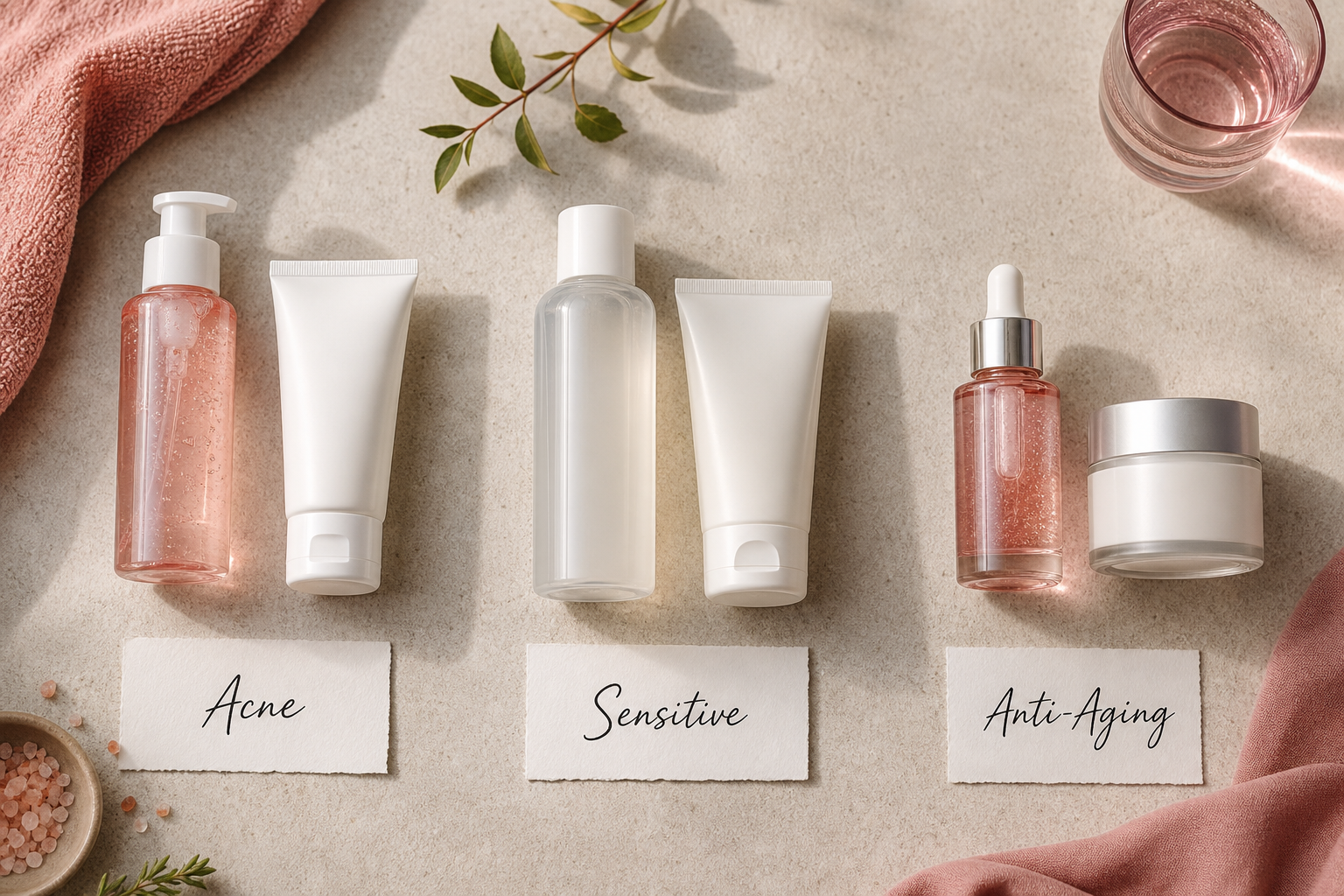
- The Acne-Prone Routine. Use a gel or foam cleanser with salicylic acid 2–3×/week — not daily, which dries the skin and triggers more oil. Spot-treat with benzoyl peroxide or BHA, not the whole face. Moisturizer is non-negotiable even if you feel oily — stripping the skin triggers more oil production, which feeds the cycle. The AAD specifies looking for "oil-free" or "non-comedogenic" labels. Niacinamide serum in the AM helps regulate oil without irritation. If you're on prescription tretinoin, skip BHA on the same nights. Patience: expect 8–12 weeks before clear results, and don't switch products mid-trial unless something is actively wrong.
- The Sensitive / Reactive Skin Routine. Focus on barrier repair: look for ceramides, centella asiatica (cica), and panthenol on the ingredient list. Use a cream cleanser without foaming agents, and lukewarm water only. The AAD recommends fragrance-free products and warns that "unscented" may still contain masking fragrances that irritate. Avoid alcohol denat, essential oils, and high-percentage actives entirely. Mineral SPF (zinc oxide, titanium dioxide) typically wears better than chemical filters for reactive skin. If you shave, the AAD's protocol reduces irritation: wet skin first, use a moisturizing shaving cream, shave with hair growth direction, and change blades every 5–7 shaves. For visible flushing episodes, dedicated calming products for redness and flushing layered into the PM step can stabilize the barrier over four to six weeks.
- The Anti-Aging Routine (30+). Cornerstone is a retinoid 2–4 nights per week — the YouTube dermatologist guide calls it the most-studied anti-aging active available. Pair with peptides (which signal repair) and vitamin C in the AM for antioxidant protection. Sunscreen becomes the single most important step in your routine: UV exposure drives a substantial portion of visible aging, and the AAD's data on elevated melanoma risk in men over 50 makes daily SPF medical, not optional. Hydration matters more with age — switch to richer moisturizers in winter and consider adding a hydrating serum (hyaluronic acid) under your moisturizer. Eye cream is optional but helps if crow's feet or under-eye hollowness is your main concern.
- The Oily / Textured Skin Routine. Lightweight gel cleanser, oil-free moisturizer, gel-based or fluid SPF (avoid heavy mineral creams that pill on oily skin). Niacinamide daily for pore appearance and oil regulation. Glycolic acid 2×/week for texture — Derma Made specifically notes more than 2–3×/week dries skin and breaks the barrier. Avoid heavy occlusives (petrolatum, shea butter) on the T-zone, where they trap sebum. Carry blotting paper rather than re-washing during the day — over-cleansing triggers rebound oil production, where the skin compensates for stripped sebum by producing more.
Your concern will shift over time. The 28-year-old battling acne becomes the 38-year-old managing fine lines becomes the 48-year-old prioritizing prevention. Routines aren't permanent installations — review yours every six months and ask whether the products you bought a year ago still match the skin you have today. Product comparison tools that show side-by-side ingredient compatibility make swapping individual items easier than rebuilding from scratch, which is what most men do (and why they waste money).
Your Personal Routine Build Checklist (30-Day Plan)
You have the framework. The next 10 minutes turn it into your routine.
A routine built around your actual skin type outperforms any generic "best" routine every single time.
- Confirm your skin type. Use the 30-minute observation test from Section 1. Write the result down. If you land between two types, default to the more sensitive option until proven otherwise — it's easier to add intensity than to repair damage.
- Choose your cleanser texture. Gel or foam for oily skin, cream for dry or sensitive, gentle gel for combination. Avoid sulfates if you're sensitive. Avoid bar soaps universally — the AAD's warning about harsh drying ingredients applies whether the bar is labeled "for men" or not.
- Select your moisturizer weight. Lightweight gel-cream for oily and combination skin, standard cream for normal, richer cream or balm for dry. Apply on damp skin within 60 seconds of cleansing to trap water effectively. Plan to re-evaluate seasonally.
- Pick your daily sunscreen. Broad-spectrum, SPF 30 or higher, water-resistant. Test textures — mineral versus chemical, fluid versus cream — until you find one you'll actually wear every single morning. The best SPF is the one that doesn't sit unused in a drawer.
- Decide on one active treatment (or none for now). Match the table in Section 3 to your top concern. If you can't choose, start with niacinamide — it pairs with almost everything and rarely irritates. If your barrier feels compromised right now, skip actives entirely for four weeks and focus on cleanse-moisturize-protect to rebuild baseline tolerance.
- Verify ingredient compatibility. Scan each product for known clashes: retinol + AHA same night, vitamin C + niacinamide in some legacy formulations, fragrance + sensitive skin. Macherre's product scanner runs this check automatically against your skin profile and existing shelf, which removes the manual cross-referencing. If you're considering formulating or sourcing your own products, the fundamentals of launching a beauty brand through white label skincare show how ingredient decks are constructed before they ever hit a shelf.
- Lock your AM/PM sequence. Write both routines on paper or in a notes app. Order is thinnest to thickest. Treatment goes between cleanse and moisturizer. SPF closes the AM routine; moisturizer closes the PM routine. Posting the sequence somewhere visible (bathroom mirror, phone wallpaper) for the first two weeks builds the habit.
- Set a 30-day review. Don't switch products mid-trial unless you see severe irritation. After 30 days, ask: fewer breakouts? less tightness? more even tone? If yes, hold steady. If no, pivot one product at a time — never the whole routine. Changing everything at once means you learn nothing.
What to watch for in the first 30 days: brief initial irritation when starting actives is normal, especially with retinol — slight dryness or flaking in week one or two often resolves as the skin adjusts. Sustained burning, peeling, or new breakouts past six weeks is not normal and warrants stopping the product. Patch test anything new on the inner forearm. Don't add a second new product until the first one has been established for two weeks. And calibrate your timeline expectations: visible results from a retinoid take 8–12 weeks, vitamin C around 4 weeks, sunscreen measured in decades rather than days.
FAQ: Common Questions Men Ask About Skincare Routines
How long until I see results from a new routine?
Set realistic timelines per product type. Sunscreen prevents damage immediately, but visible "results" are the absence of new sun damage measured over years. Cleanser and moisturizer: 1–2 weeks for skin to stop feeling tight or rebound-oily. Niacinamide: 4–6 weeks for pore appearance and tone. Vitamin C: 4–8 weeks for brightness and pigment fading. Retinoids: 8–12 weeks minimum, with full collagen-remodeling effects landing closer to the six-month mark. The dermatologist framework from the YouTube guide treats these timelines as fixed biology, not marketing — stop product-hopping. Most "this doesn't work" verdicts happen before week six, which is before the skin has had time to respond.
Why does my skin sometimes get worse when I add a new product?
Three causes account for almost all of it. First, purging — actives like retinoids and BHA accelerate cell turnover and surface existing clogged pores. Purging lasts four to six weeks at most and only happens in areas where you already break out. Second, irritation — barrier disruption from over-application, stacking actives, or sensitivity to fragrance or alcohol. Irritation stings, looks red, and shows up in new areas (including places you don't normally break out). Stop the product and reset for seven days with just cleanser and moisturizer. Third, comedogenic mismatch — a moisturizer or SPF that's clogging your pores. Check labels for "non-comedogenic" per AAD guidance, and try a different formulation.
Do expensive products work better than affordable ones?
Not categorically. The board-certified dermatologist in the YouTube routine guide explicitly recommends keeping cleansers simple and inexpensive — no active ingredients needed in a product that gets rinsed off in 20 seconds. Where to spend: sunscreen, because texture matters enormously for daily wear, and targeted actives like vitamin C and retinoids, where formulation stability determines whether the molecule still works by the time you apply it. Where to save: cleanser and basic moisturizer. A $12 cleanser and a $40 sunscreen often outperform the reverse combination. Ingredient list and formulation matter more than price, and "luxury" markup rarely reflects better chemistry.