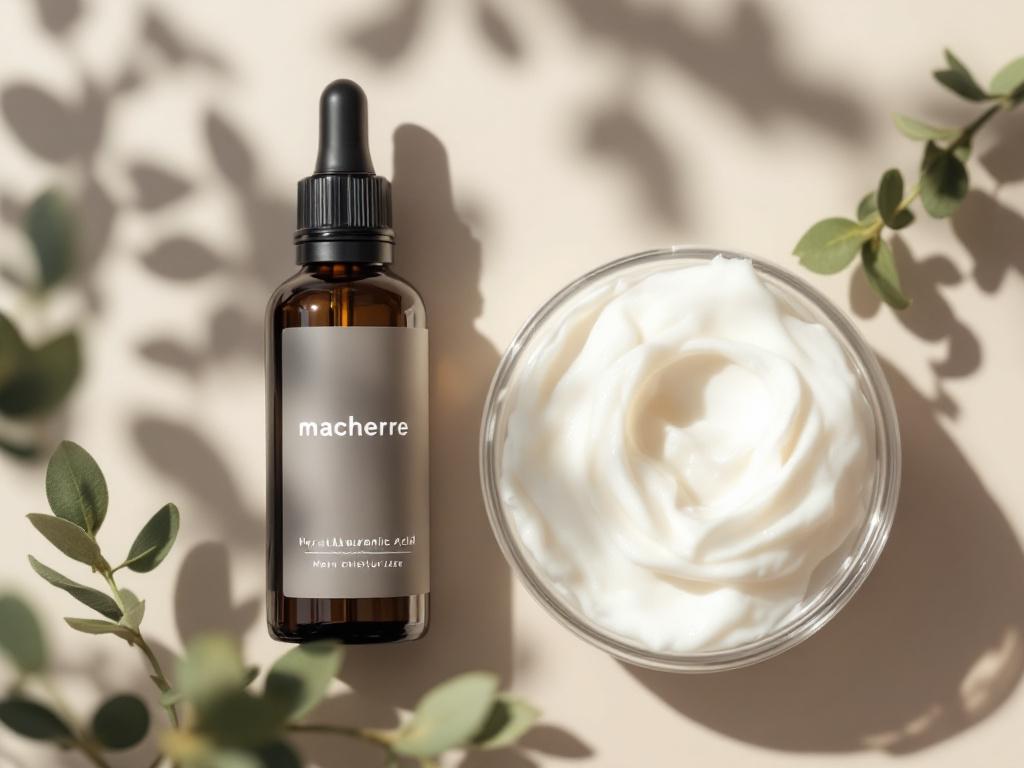
Hyaluronic Acid Moisturizers: What They Do and How to Pick the Right One
Table of Contents
- Why Hyaluronic Acid Moisturizers Fail (Even When You Pick a "Good" One)
- HA Moisturizer Formats Compared: Serum, Cream, Essence, or Gel
- The 6-Point Ingredient Checklist That Predicts Performance
- Matching HA Moisturizers to Your Skin Type and Concern
- Hyaluronic Acid Moisturizer Pricing: When to Spend and When to Save
- Red Flags on an HA Moisturizer Label
- A 6-Step Method to Test Any HA Moisturizer Before Committing
You bought the hyaluronic acid moisturizer everyone raved about. You followed the routine. Three weeks in, your skin still feels tight by 2 p.m., and the flakes around your nose haven't budged. You're now scrolling through 47 other options, each promising "intense hydration," each priced anywhere from $8 to $89, each making the same claim with slightly different photography.
Here's what most product pages skip: a hyaluronic acid moisturizer can absolutely transform dehydrated skin — but only under specific conditions. The molecule itself is impressive. According to Harvard Health Publishing, hyaluronic acid binds over 1,000 times its weight in water. That number, though, comes from lab conditions. In your actual bathroom, performance depends on the humidity in the air, what's underneath the product, what's on top, and where HA sits in the ingredient list.
By the time you finish this guide, you'll be able to evaluate any HA moisturizer in under a minute — reading the formula the way a chemist would, not the way the marketing wants you to.
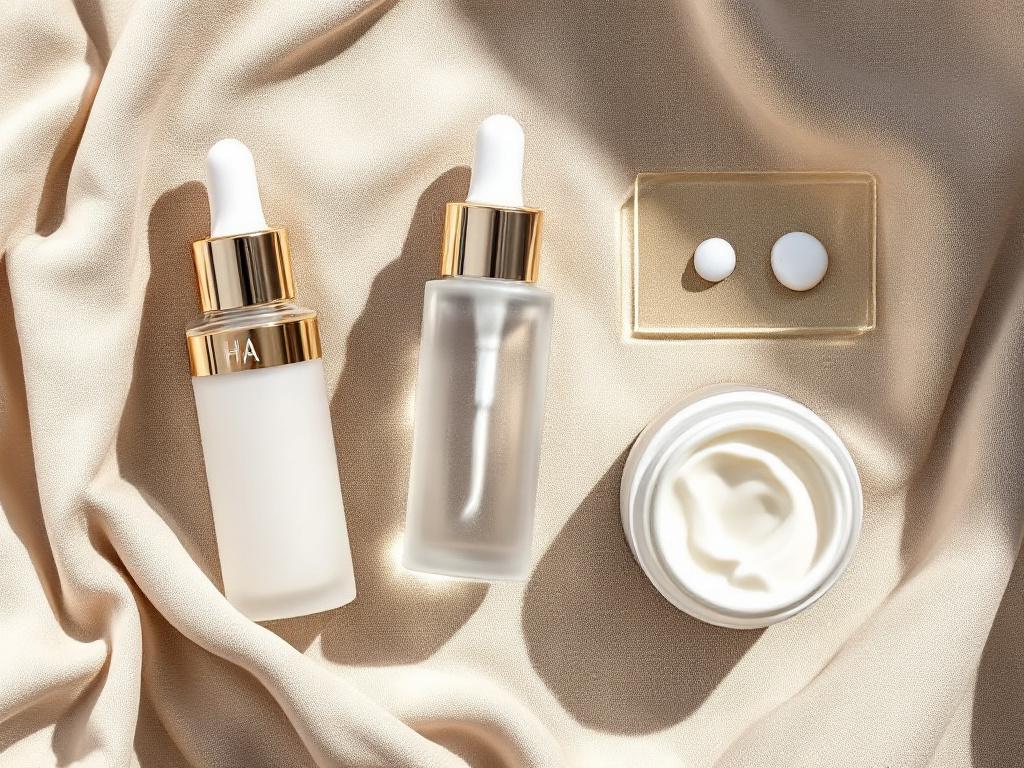
Let's start with why so many HA moisturizers underperform — even the "good" ones.
Why Hyaluronic Acid Moisturizers Fail (Even When You Pick a "Good" One)
Hyaluronic acid is a humectant, not an occlusive. Read that twice. It pulls water — from the dermis below, from humid air above — and concentrates it in the stratum corneum, the top layer of your skin. It does not seal anything in. It does not form a barrier. On its own, it is a magnet, not a lid.
That distinction is where most HA moisturizers fall apart in real-world use. Three failure modes account for nearly every disappointing result.
Failure mode one: applied to bone-dry skin in low-humidity conditions. When there's no water in the surrounding air, hyaluronic acid still does its job — it just pulls moisture from the only available source, which is the deeper layers of your own skin. A University of Manchester dermatology study found the celebrated "1,000x water binding" figure only holds under lab vacuum conditions; once you introduce realistic humidity and pH variables, performance drops significantly. Research published in the International Journal of Cosmetic Science is more pointed: in environments below 40% humidity, unsealed HA increases dehydration by roughly 18%, while in 60%+ humidity, the same product improves hydration by 12%. That's not a small swing. That's the difference between "this product works" and "this product made my skin worse."
Failure mode two: applied without an occlusive layer on top. HA brings water to the surface. Without something to seal it — a cream, an oil, a balm — that water evaporates within minutes. A study in the Journal of Cosmetic Dermatology measured this directly: HA used alone retained 25-30% moisture over 8 hours. HA paired with an occlusive like petrolatum or dimethicone retained 75-80%. That's nearly triple the performance from a single change in routine — not the product.
Failure mode three: used on a compromised barrier without proper occlusion. If your skin is already irritated, eczema-prone, or recently over-exfoliated, HA can make things worse before it makes them better. The Eczema & Dermatitis Journal reported that 23% of patients with compromised barriers got worse using HA without occlusion — not because the ingredient was harmful, but because their skin couldn't hold onto what the HA was trying to provide.
Hyaluronic acid doesn't hold water in your skin. It pulls water there. Without an occlusive layer on top, you've built a highway for moisture to escape.
Then there's the "higher percentage is better" myth, which the data dismantles cleanly. A 2023 paper in Dermatology and Therapy found that 0.5–1.5% HA delivers optimal hydration with minimal irritation. Push past 2% and irritation reports jump by 42% — with no measurable performance gain. Healthline's clinical guidance reaches the same conclusion: stay under 2% to avoid paradoxical dryness.
Which is the real lesson here. A 0.5% HA cream with the right supporting cast — glycerin, panthenol, a quiet ceramide blend, an occlusive layer baked in — will outperform a flashy 2% HA serum used alone every single time. The percentage on the front of the bottle is almost never the variable that matters. The neighborhood it lives in is.
HA Moisturizer Formats Compared: Serum, Cream, Essence, or Gel
Format matters more than most buyers realize, because format determines where in your routine the product sits and whether it can stand alone. A serum is not a "lighter cream." An essence is not a "watered-down serum." Each is built for a specific job, and matching the format to your climate and skin type quietly does about half the work of picking well.
| Format | Where It Sits | Can It Stand Alone? | Best Skin Type | Best Climate |
|---|---|---|---|---|
| HA Serum | After cleanse, before moisturizer | No — needs occlusive on top | Oily, combination, dehydrated | Humid or moderate |
| HA Cream | Final hydration step | Yes | Dry, mature, eczema-prone | Arid, cold, low humidity |
| HA Essence/Toner | First layer post-cleanse | No — hydration boost only | All types as a layer | Humid climates |
| HA Gel Moisturizer | Standalone or under SPF | Yes (humid); no (dry) | Oily, acne-prone | Humid only |
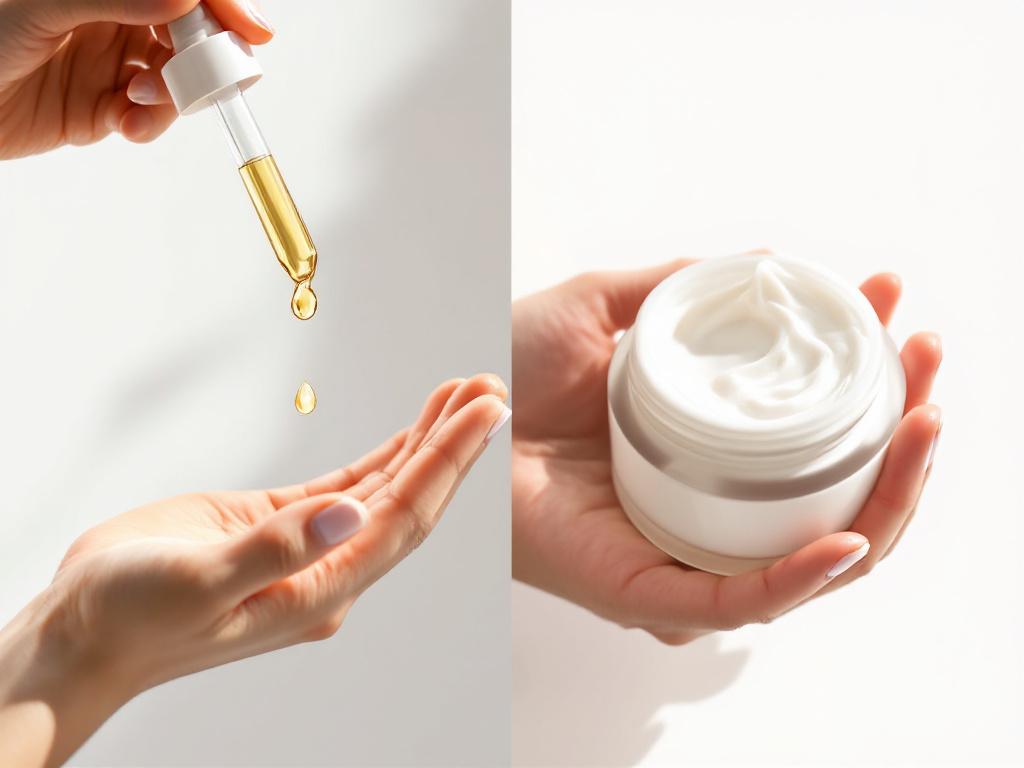
The default skincare advice — "serum under moisturizer" — assumes a humid climate and a barrier in good shape. In Singapore or Houston in July, that pattern works beautifully. In Denver in February, it can backfire badly. Dry-climate readers often do better with an HA cream as their primary product rather than an HA serum waiting for a partner that gets forgotten.
The most common layering mistake is applying an HA serum over an occlusive — over a face oil, over a balm, over silicone-heavy primer. Hyaluronic acid is a water-soluble molecule. It cannot penetrate an oil layer. If you apply oil first and HA second, the HA sits on top doing nothing, eventually getting wiped off on a pillow. Water-based products go on damp skin first. Occlusives go last. The order is non-negotiable.
Combination skin presents its own trap. The oily T-zone wants a gel. The dry cheeks want a cream. One product across the entire face usually fails one zone or the other. The fix is either zone-treating (HA serum everywhere, then gel on the T-zone, richer cream on cheeks) or finding a single multi-weight HA gel-cream hybrid that splits the difference.
Dr. Hadley King, MD, FAAD, a board-certified dermatologist and clinical instructor at Weill Cornell Medical College, frames it as a "moisture sandwich": HA needs complementary humectants beneath it and an occlusive above it, or in dry conditions it becomes — in her words — "a moisture thief." The cream format builds the sandwich into one product. The serum format requires you to build it yourself. Neither is better. They just demand different things from you.
If you tend to forget the occlusive step, the serum approach is probably going to disappoint you regardless of which brand you pick. Pick a cream. The Macherre routine builder flags missing occlusive partners when you add an HA serum to a routine, which catches this exact mistake before it costs you eight weeks of trial-and-error.
The 6-Point Ingredient Checklist That Predicts Performance
Reading an HA moisturizer label isn't about finding "hyaluronic acid." That's the easy part. It's about reading the neighborhood the ingredient lives in. These six checks predict performance better than any marketing claim on the front of the bottle.
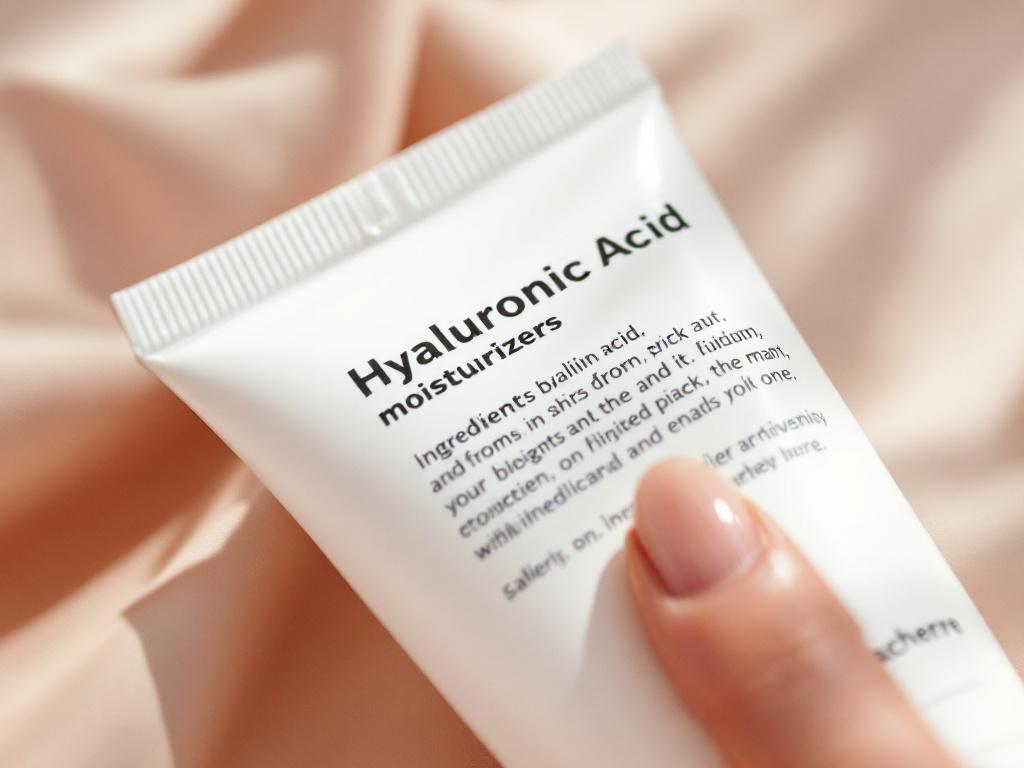
1. Molecular weight: low, high, or mixed.
Low molecular weight HA (under 50 kDa) penetrates deeper for plumping. High molecular weight HA (over 1,000 kDa) sits on the surface for instant hydration. Multi-weight formulas do both and almost always outperform single-weight products. The EU Cosmetic Regulation EC 1223/2009 requires molecular weight disclosure on European labels, but most US products skip this. Look for terms like "multi-weight HA," "low molecular weight sodium hyaluronate," or "hydrolyzed hyaluronic acid" (the smaller fragments). Dr. Zoe Diana Draelos, MD, FAAD, of Duke University School of Medicine, has stated plainly that only full-spectrum formulations deliver measurable barrier repair on clinical instrumentation — single-weight HA mostly delivers a feeling, not a result.
2. At least one supporting humectant in the top 5 ingredients.
Glycerin, panthenol, butylene glycol, sorbitol, or propanediol. HA solo is weaker than HA plus glycerin plus panthenol — every time. That's the moisture sandwich in formulation form. According to ISO 17562:2017 humectant standards, effective formulations run glycerin at 2–5%. If you don't see a supporting humectant near the top of the list, HA is working alone, and HA alone is unimpressive.
3. pH between 4.5 and 5.5.
This is the natural pH range of healthy skin. Outside it, HA stability drops and your barrier gets stressed. USP General Chapter <1193> on Topical Dermatological Preparations specifies this range for compatibility with skin function. Reputable brands publish pH on the product page or in customer service responses. If a brand won't disclose pH after a two-minute search, treat that as a yellow flag.
4. A built-in or planned occlusive partner.
If the product is a cream, scan for occlusives in the formula itself: squalane, shea butter, dimethicone, petrolatum, ceramides, jojoba esters. If it's a serum, you need a separate product on top — confirm you actually have one that's compatible.
5. No high-position irritants.
Fragrance or "parfum" in the top 10 ingredients. Denatured alcohol (alcohol denat., SD alcohol). Drying essential oils like citrus, peppermint, eucalyptus. Menthol or camphor. These ingredients dry out the very moisture HA is working to attract — completely undoing the point of the product.
6. HA appears above the fifth ingredient position.
The Cosmetics Journal found that HA listed below position 5 typically reflects under 1.5% concentration, which sits below the functional threshold. The brand is using HA as a marketing keyword, not a functional active. Look for hyaluronic acid (or sodium hyaluronate) in positions 2 through 5 for meaningful levels.
The best hyaluronic acid moisturizer isn't the one with the highest HA percentage. It's the one where HA has the right neighbors — supporting humectants below, an occlusive above, and a pH that doesn't fight your barrier.
This is exactly the checklist Macherre's ingredient scanner runs automatically when you scan a barcode. But knowing why each item matters makes you a faster, smarter buyer regardless of which tool you reach for.
Matching HA Moisturizers to Your Skin Type and Concern
There is no universal "best" hyaluronic acid moisturizer. There's a best one for your skin, in your climate, at this point in your routine. Here's how to narrow the field for your specific situation.
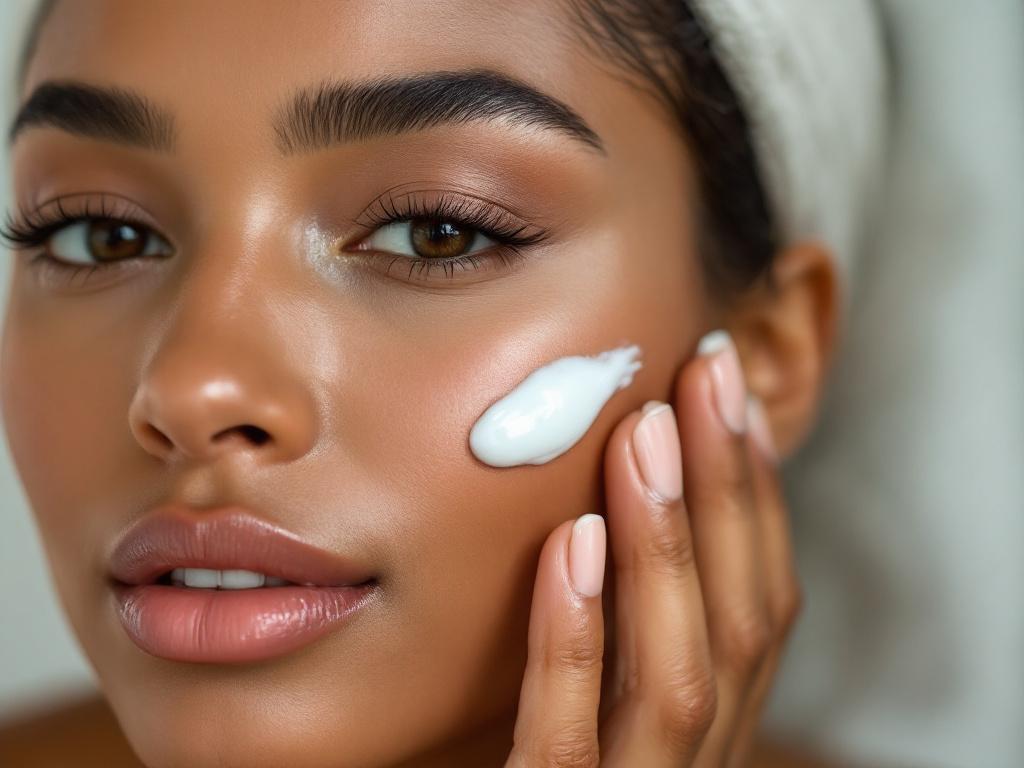
Oily and Acne-Prone Skin.
Skip oil-heavy creams; they trap sebum without adding meaningful hydration. Reach for HA serums or gel moisturizers paired with niacinamide at 4–5% or low-strength salicylic acid as supporting actives. Watch out for comedogenic oils — coconut oil and cocoa butter are at the top of that list. For fungal acne, HA itself is safe (Malassezia yeast can't feed on it), but esters, fatty acids in the C11–C24 range, and several oils in the surrounding formula will trigger flares. The product's HA content isn't the problem; the supporting ingredients can be.Dehydrated Skin (Oily Underneath, Tight on Top).
This is the most misdiagnosed skin type, and dehydrated skin doesn't need a heavy cream. It needs water, not oil. An HA serum plus a lightweight gel moisturizer is the sweet spot. Heavy creams often backfire here because dehydrated skin frequently has a compromised barrier — the same 23% worse-outcomes population from the Eczema & Dermatitis Journal data. The fix is usually thinner products applied more frequently, not richer products applied once.Dry and Eczema-Prone Skin.
HA needs a real occlusive partner — non-negotiable. Choose creams or balms built with ceramides, shea butter, or petrolatum. Fragrance-free is critical; the American Academy of Dermatology explicitly recommends fragrance-free moisturizers for dry and sensitive skin. For seborrheic dermatitis, HA is safe, but avoid formulas leaning on fatty acid esters or oils that feed Malassezia. Look for short ingredient lists. Complexity is rarely a feature here; it's usually a risk factor. If you're curious about traditional emollient alternatives, tallow skincare offers a very different occlusive profile worth understanding.Sensitive and Reactive Skin (Including Rosacea).
Shorter ingredient lists win. Avoid essential oils, denatured alcohol, fragrance, and high-strength actives layered near HA. For rosacea specifically, look for cooling supporting ingredients — centella asiatica, allantoin, panthenol — and skip warming oils or capsaicin-adjacent botanicals. Reactive skin often does well with very basic, very boring HA creams. The boring formulas are usually the ones that work.Combination Skin.
Zone-treat or hybrid-format. Apply HA serum across the whole face, then layer a lightweight gel on the T-zone and a richer cream on cheeks and any dry patches. Alternatively, find a single multi-weight HA cream rich enough for cheeks but light enough not to suffocate the T-zone — usually a gel-cream hybrid built around a balanced ratio of humectants to emollients.
Macherre lets you filter HA moisturizers by skin concern — fungal acne, rosacea, seborrheic dermatitis, sensitivity — so you're only looking at products flagged safe for your situation. It's useful when you're tired of the trial-and-error cycle and just want to skip directly to candidates that aren't going to undo themselves.
Hyaluronic Acid Moisturizer Pricing: When to Spend and When to Save
Price is a terrible proxy for HA moisturizer quality. An independent investigation by Consumer Reports tested across price tiers and found 68% of HA moisturizers priced over $30 contained less than 0.5% HA — effectively cosmetic levels. Meanwhile, 32% of under-$10 options had superior formulation science. The cosmetics aisle is one of the few categories where the $50 jar regularly loses to the $8 tube on actual chemistry.
| Price Tier | What You're Paying For | Red Flags at This Tier |
|---|---|---|
| Budget (<$10) | Functional concentration; basic humectant pairing; pH-balanced if reputable | Fragrance, high alcohol, silicone-only "feel," no pH disclosure |
| Mid-Range ($10–30) | Multi-weight HA; stabilizer systems; ceramide or peptide pairings | 40+ ingredient formulas; HA below position 5; trendy add-ins |
| Luxury ($30+) | Verified clinical testing; encapsulated HA; rare actives | "Diamond dust" claims; vague "complexes"; celebrity branding tax |
Premium pricing is genuinely justified in three places: stabilization systems for low-molecular-weight HA (which degrades quickly and needs real chemistry to preserve); third-party clinical testing using corneometer and TEWL measurements; and smaller-batch production runs for sensitive-skin formulas where contamination tolerance is tighter. Outside of those three categories, you're paying for packaging, marketing, and celebrity endorsement.
When to splurge versus save comes down to one question: how many products is your HA moisturizer doing the work of?
Splurge if your HA moisturizer is your only hydration step — no separate serum, no occlusive layer, no supporting products. In that case, you need a multi-weight, fully-formulated cream doing all three jobs at once, and that level of formulation chemistry is genuinely worth $30–50.
Save if HA is one piece of a multi-step routine. A budget HA serum plus a budget occlusive will almost always match a luxury all-in-one on hydration outcomes, often for one-third the total cost. The dupe economy in skincare is real — many luxury and drugstore HA moisturizers share 80%+ of their ingredient lists, with the price difference allocated almost entirely to brand markup. A dupe-finding tool can surface these matches in seconds rather than the hours it takes to manually cross-reference ingredient panels. (If you're new to identifying dupes, our guide on choosing skin brightening serums walks through the same comparison logic applied to a different category.)
The roughly $400/year you might save buying smart at this tier — assuming you'd otherwise repurchase a $50 cream every six weeks — is not a small benefit. It's about a year of an additional serum, or three years of a quality SPF, depending on how you redirect the budget.
Red Flags on an HA Moisturizer Label
If you only scan for the words "hyaluronic acid" on the front of the bottle, you'll miss the signals on the back that predict disappointment. Here's what to actually veto.
Hyaluronic acid listed below position 5 in the ingredients.
Indicates under 1.5% concentration — likely below the effective threshold per the Cosmetics Journal findings cited earlier. The brand is using HA as a marketing keyword on the front while delivering a near-zero functional dose on the back.No supporting humectants in the top 5.
No glycerin, panthenol, sorbitol, or butylene glycol means HA is working alone. HA solo is weak. Functional formulas always pair humectants — that's how the chemistry actually works.Fragrance, parfum, or essential oils in the top 10.
Fragrance is the leading cause of cosmetic contact dermatitis. Citrus oils — bergamot, lemon, lime — are also phototoxic, meaning they can cause pigmentation reactions when exposed to sunlight. None of these contribute hydration. They contribute scent at the cost of skin health.Marketed as "gel" with no occlusive layer, sold as a standalone moisturizer.
Fine for humid climates and oily skin. A trap for dry skin or arid regions. The water HA pulls to the surface will evaporate within an hour without an occlusive sealing it in, leaving skin tighter than before application."Hydrating complex" or "proprietary blend" instead of named ingredients.
Transparency matters. If a brand won't disclose what's in their "complex," assume there's a commercial reason — usually it's a stabilizer cocktail or low-cost humectant they don't want to highlight. Knowing what's actually in a formula is the foundation of every other decision you'll make, and the white-label skincare market shows just how often the same base formula gets sold under different brand names at wildly different prices.Silicone-heavy formula with no humectants.
Dimethicone and cyclopentasiloxane give a smooth, finished feel but contribute zero hydration. A formula leaning on silicones for "moisturized feel" is selling sensation, not function. You'll feel hydrated for 20 minutes and look flaky by lunch."Anti-wrinkle" or "dermal filler" as the headline claim.
Dr. Peter L. Olds, PhD, formerly of the FDA Center for Devices and Radiological Health overseeing dermal filler regulation, has stated bluntly that topical HA pharmacologically cannot replicate injectable filler results. When skincare brands use "dermal filler" terminology on a cream, they're exploiting regulatory loopholes in cosmetic versus drug claims. Expect disappointment proportional to the bombast.No pH disclosure anywhere on the brand's website or product page.
Legitimate brands publish this. If you can't find it after a two-minute search — including checking customer service responses on the brand's social channels — the formula may be outside the 4.5–5.5 range where HA actually performs. Silence on pH is a soft tell that the brand either doesn't know its own pH or doesn't want you to.
If an HA moisturizer promises hydration but skips supporting humectants, an occlusive layer, or a disclosed pH, it's a marketing product — not a hydration solution.
A 6-Step Method to Test Any HA Moisturizer Before Committing
Buying an HA moisturizer is low-risk only if you test it correctly. This is the repeatable process — borrowed from clinical patch-test protocols — that catches duds and confirms keepers before you finish the bottle.

Step 1: Scan the ingredient list before checkout (5 minutes).
Run the six-point checklist from earlier in this article — HA position, supporting humectants, pH, occlusive plan, irritant scan, MW indicators. A barcode scan handles this automatically, but you can do it manually with the ingredient list pulled up on the brand's product page. If three or more checklist items fail, don't buy. You'll waste four weeks proving what the label already told you.
Step 2: Patch test for 7–10 days on one area (forearm or jawline).
Apply once daily to a coin-sized patch. Watch for redness, stinging, breakouts, or new texture. The British Journal of Dermatology recommends a minimum 7-day window to catch delayed reactions — sensitivity to fragrance, preservatives, or supporting actives can take a full week to show up. Skip this step and you're risking a full-face reaction that takes weeks to calm down.
Step 3: Document your baseline before going full-face.
Take a photo using the same lighting and same angle each time. Assign a 1–10 hydration score (tight? plump? flaky?). Note any active concerns — visible redness, specific dry patches, any spots you're tracking. Without a baseline, you cannot tell whether the product is working. Memory is unreliable; week-one photos are not.
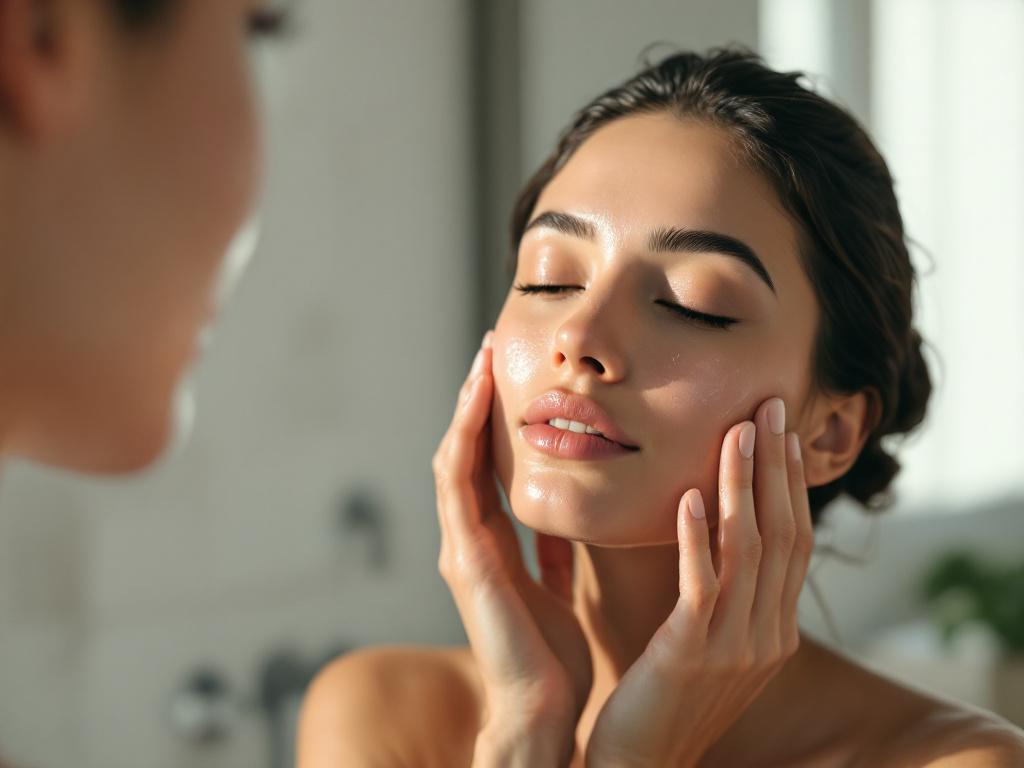
Step 4: Apply to damp skin, then seal.
Skin should be 30–40% surface-damp — about 30 seconds after towel-blotting, not bone-dry, not dripping. This is the optimal moisture content per the British Journal of Dermatology protocol for humectant application. Wait roughly 60 seconds after applying HA, then layer your occlusive (cream, oil, or balm). If you're using an HA cream that already contains occlusives, the wait isn't necessary. The "damp skin" rule is non-negotiable for serums, though — applied to dry skin, an HA serum delivers maybe 40% of its potential.
Step 5: Hold all other variables steady for 4 weeks.
Don't introduce new actives. Don't change cleansers. Don't switch climates mid-test (if you travel somewhere noticeably more or less humid, pause the test and restart). Don't alter sleep or diet dramatically. You need clean signal, and four weeks is the minimum window to see whether a hydration product is actually building up barrier function or just providing surface plumping.
Step 6: Decide — keep, swap your occlusive partner, or return.
Three possible outcomes after four weeks:
- Sustained hydration improvement over baseline: keep it.
- No change: check if your occlusive partner is the weak link before swapping the HA product itself. Often the HA is fine; the layer on top is missing or wrong. Try the same HA product with a different occlusive for another two weeks before writing it off.
- Irritation or breakouts: note the specific ingredients you'll need to avoid in future purchases, and return within the brand's window. Most reputable brands offer 30-day satisfaction returns even on opened products — use that policy.
The point of this whole method is to convert "I tried it and I'm not sure if it worked" into "I tested it correctly and I have data." Once you do this for two or three products, you'll start to recognize your own patterns — which supporting ingredients your skin loves, which formats actually fit your climate, which price tier delivers for your specific concerns. That pattern recognition compounds. Each subsequent purchase gets easier.
Before your next HA moisturizer purchase, scan it on Macherre — the ingredient breakdown, clash detection, and skin-type filters will catch most of what this guide just covered in about ten seconds.