Korres Skincare Guide: Greek Botanicals That Belong in Your Routine
Korres Skincare: A Buyer's Guide to Greek Botanicals, Ingredient Honesty, and Whether It Fits Your Routine
You're standing in Sephora holding a frosted glass bottle of Korres Wild Rose serum. Or you're three tabs deep on Cult Beauty, comparing the Greek Yoghurt mask against your usual moisturiser. The packaging is beautiful. The story — Athenian pharmacy, 3,000 herbs, Mediterranean botanicals — is seductive. But before you tap "add to cart," you want to know what Korres skincare actually is, which products suit your specific skin, and whether the price reflects the formula or the heritage. That's what this guide is built for.
Table of Contents
- What Korres Actually Is
- The Product Lines, Decoded
- Matching Korres to Your Skin Type
- Korres vs. Comparable Brands
- How to Audit Any Korres Product Before You Buy
- Building a Real Routine With Korres
- Korres FAQ
What Korres Actually Is
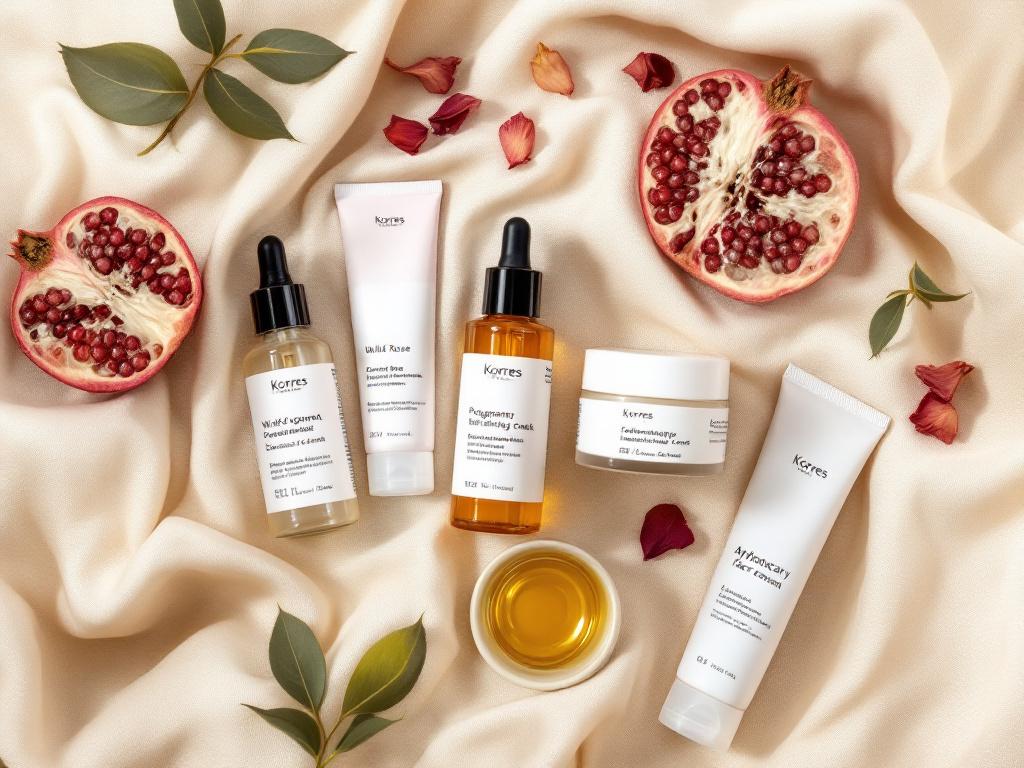
The visual pull is real. Korres has spent nearly three decades cultivating an aesthetic — terracotta tones, botanical illustrations, products named after Greek pharmacy traditions — that signals "considered" before you've even read the label. That signal is doing a lot of work in your purchase decision. The job of this section is to separate the story from the substance so you can decide which parts of the story you're actually willing to pay for.
The factual origin is straightforward. Korres began as a homeopathic pharmacy in Athens in 1996, founded by George Korres, a pharmacist, and Lena Korres. In a 2012 interview with The Ecologist — one of the few independent profiles of the founders, and now over a decade old — Lena Korres described the brand's origin as a desire to translate Greek herbal medicine traditions into modern cosmetic formulations. That interview predates the company's significant expansion, multiple line launches, and corporate changes, so treat it as historical context rather than current operational fact.
The brand's stated positioning on its own website (korres.com) leans on three pillars: natural and botanical formulations, dermatological testing claims, and access to a proprietary archive of over 3,000 Greek herbs. Those are brand claims, not third-party verified facts. "Dermatologically tested" in cosmetics labelling typically means a product has been patch-tested on a panel of human subjects — it does not mean it has been proven effective for any specific concern, nor that it's been tested for your skin type.
Here's the part most buyers miss. The word "natural" has no fixed legal definition in either the EU or US cosmetics regulation. The European framework that governs cosmetic safety and labelling — EU Cosmetics Regulation EC 1223/2009 — sets rules for ingredient disclosure, allergen labelling, and safety assessment, but does not regulate marketing terms like "natural," "clean," or "botanical." That means the percentage of natural-origin ingredients in any korres skincare product is brand-defined, not regulated. A formula can be 95% natural-origin or 30% natural-origin and use the same marketing vocabulary.
This guide is not trying to convince you Korres is good or bad in the abstract. The brand makes real products with full ingredient disclosure on its packaging and website. Whether those products work for your skin depends on three things: your skin type and sensitivities, the specific SKU you're considering (not the line's reputation), and whether you're paying for the experience or the ingredients. The rest of this article walks through each major line, compares Korres against its actual competitors, and gives you a practical method for auditing any product before it lands in your cart — using tools like the korres skincare scans available in ingredient-decoding apps to verify the current INCI against your skin profile.
The Product Lines, Decoded
Korres organises its catalogue into hero ingredient ranges. The brand site presents each as a coherent routine system, but the lines vary significantly in formulation philosophy, fragrance load, and who they actually suit. Verify current availability and SKU details on korres.com before buying — the brand reformulates and rotates lines.
Wild Rose — brightening and vitamin C positioning. Korres markets this line for dull, dehydrated, early-aging skin, with rosehip seed oil and vitamin C derivatives as the headline actives. It suits buyers who want a gentle brightening layer rather than a clinical-strength vitamin C. The watch-out: vitamin C derivatives in rosehip-based formulas oxidise on exposure to air and light. Check that the packaging is opaque, airless, or pump-dispensed rather than a wide-mouth jar — and check the colour of the serum on first use, because a brown or amber tone in a "fresh" bottle usually means oxidation has already started.
Greek Yoghurt — soothing and post-sun. Marketed for sensitive skin and after-sun recovery, with probiotic-derived ingredients and a cooling texture. The line genuinely works as a comfort layer for mildly stressed skin. The watch-out: despite the "soothing" positioning, several SKUs in this range contain fragrance. A product can be soothing for the average user and still trigger a reaction in someone with true sensitivity. Verify the INCI of the specific SKU — the Greek Yoghurt Probiotic Skin Supplement Serum entry on INCIDecoder is a useful reference point for current ingredient breakdowns.
Pomegranate — mattifying and balancing. Positioned for combination and oily skin, with a light gel-cream texture and pomegranate extract. It suits T-zone management and humid climates. The watch-out: several pomegranate SKUs include alcohol denat for the immediate mattifying feel. A tight, oil-free sensation in the first hour is not the same as long-term sebum regulation, and high-alcohol formulas can disrupt the barrier on dry patches, prompting more oil production over time.
Castanea Arcadia (Chestnut) — firming and anti-aging. Built around chestnut extract, this line targets mature skin looking for a coherent single-brand routine. It works well for buyers who like a richer texture and a more traditional anti-aging product feel. The watch-out: heritage anti-aging lines often carry a heavy fragrance load, and Castanea Arcadia is no exception. If you've ever reacted to fragranced anti-aging creams, scan the INCI before buying.
Apothecary Wild Rose and Black Pine — the premium tier. Korres' higher-priced line, positioned as concentrated anti-aging with reformulated textures. The watch-out: the price jump from the standard Wild Rose line to Apothecary is largely a story about texture refinement and active concentration claims. Lay the two INCI lists side by side before paying the premium. If the top 10 ingredients are substantially similar, the upgrade is mostly aesthetic and sensorial — which is a valid reason to buy, but only if you're naming it honestly.
White Pine Meno-Reboot — menopausal skin. A newer line targeting density loss, dryness, and sensitivity shifts associated with hormonal change. The category is genuinely underserved, so a dedicated line is welcome. The watch-out: as a recent launch, independent reviews and long-term user data are limited. Patch test mandatory, and don't assume "designed for menopausal skin" guarantees compatibility with your hormonal skin presentation, which varies enormously between individuals.
Matching Korres to Your Skin Type
Below is a first-pass compatibility filter. Treat it as a starting point for narrowing your search, not a verdict. Two products inside the same Korres line can have very different INCI lists, and the only reliable approach is to scan the specific SKU you're considering against your skin profile.
| Skin Type / Concern | Consider First | Approach With Caution | Check On Label |
|---|---|---|---|
| Dry / mature | Apothecary, Castanea Arcadia | Pomegranate (alcohol denat) | Glycerin, squalane in top 5 |
| Oily / combination | Pomegranate | Apothecary (richer textures) | Gel base; alcohol position |
| Sensitive / reactive | Greek Yoghurt (fragrance-free SKUs) | Citrus or EO-heavy lines | Parfum, limonene, linalool |
| Rosacea-prone | None as first-line — patch test | Mint, citrus, essential oils | Mentha, citrus, alcohol denat |
| Fungal acne (Malassezia) | Verify SKU-by-SKU | Fatty esters, certain oils | Esters ending in -ate, oleic oils |
| Acne / breakout-prone | Pomegranate (mattifying) | Oil-rich Wild Rose, Apothecary | Comedogenic carrier oils |
| Menopausal dryness | White Pine Meno-Reboot | Lightweight oily-skin formulas | Ceramides, peptides, occlusives |
The single most important reframe for shopping Korres: botanical does not equal gentle. Essential oils are a botanical category, and they are also among the most frequently implicated triggers for cosmetic contact dermatitis in fragrance-allergen patch testing. The EU's mandatory allergen disclosure list under Regulation EC 1223/2009 names 26 fragrance compounds that must appear individually on the label when present above defined thresholds. Korres formulations frequently contain several of them — linalool, limonene, citronellol, geraniol, and citral are typical in rose-forward and citrus-forward products. None of these are dangerous on average skin. All of them are higher-risk on reactive skin.
The fungal acne consideration is worth flagging separately because it's where "natural" positioning misleads buyers most. Malassezia, the yeast involved in fungal acne and seborrheic dermatitis, feeds on fatty acids with carbon chains roughly in the 11–24 range. That range includes a significant portion of the plant oils and oil-derived emollients Korres uses — olive-derived squalane variants, certain seed oils, and several ester-form emollients. A botanical formula is not safer for Malassezia-prone skin. Often it carries higher risk than a synthetic-heavy alternative built on Malassezia-safe esters.
The practical takeaway: use the table to filter, then verify. Pull up the current INCI for the exact bottle in front of you using ingredient-decoding tools that match the formula to your sensitivities, and only then make the call.
Korres vs. Comparable Brands
A core question for any Korres buyer: what are you actually paying for, and would your money work harder somewhere else? Here's how Korres sits against the brands it's genuinely competing with on shelf and in cart.
| Brand | Typical Price (USD) | Core Positioning | Best Fit For |
|---|---|---|---|
| Korres | $30–$72 | Greek botanical, heritage pharmacy | Heritage + Mediterranean aesthetic buyers |
| The Ordinary | $7–$20 | Single-active, no-frills | Active maximalists on budget |
| The Inkey List | $10–$25 | Ingredient-led, education-first | Beginners learning while shopping |
| Drunk Elephant | $40–$90 | Clean-clinical, no essential oils | Sensitive skin avoiding fragrance |
| Caudalie | $35–$80 | French botanical (grape/vine) | Direct philosophical comparison |
| Augustinus Bader | $90–$390 | Biotech "TFC8" complex | Innovation-over-heritage premium |

Korres is not competing with The Ordinary on price per active, and it never was. It's competing with Caudalie on heritage, scent, and the feeling of buying into a story.
The closest philosophical comparison to Korres is Caudalie, not the indie active brands. Both lean on national heritage (Greek pharmacy versus French vineyard), botanical sourcing stories, and a pharmacy-adjacent identity. Pricing sits in the same band. If you're choosing between Korres and Caudalie, you're choosing between two heritage-narrative brands at similar price points, and the deciding factor is usually scent profile, texture preference, and which origin story you find more emotionally resonant. Neither will out-deliver the other on raw efficacy per dollar.
Where Korres genuinely wins: heritage-driven buyers, fans of textured botanical formulas, and consumers who want a coherent multi-product line rather than mix-and-match actives from five different brands. The visual consistency on your shelf, the matched scent profiles across products, and the satisfying ritual of layering within one system are real values. Just be honest with yourself about whether that's what you're paying for.
Where Korres loses on pure efficacy-per-dollar: if you want high-concentration single actives — niacinamide at 10%, retinol at 0.5%, L-ascorbic acid at 15% — The Ordinary and The Inkey List deliver them at roughly a quarter of the price. Korres is not formulated for that buyer. Its product philosophy is gentler concentrations layered within a broader botanical context, which is a legitimate approach and the wrong fit if you're chasing percentages.
Where Korres loses on sensitive-skin safety: Drunk Elephant's explicit exclusion of fragrance and essential oils makes it a safer default for reactive skin, despite the higher price. If you're managing rosacea, contact dermatitis, or unexplained reactivity, a fragrance-free clinical brand will protect your barrier better than a botanical line ever can.
The reframe to take away: instead of asking "is Korres worth it," ask which of three reasons is driving your purchase — the experience, the heritage, or the ingredients. Each answer points to a different decision. If it's experience or heritage, Korres delivers. If it's the ingredients alone, a quick scan against a dupe-finder will usually surface a similarly formulated product at a lower price point. Heritage and tradition are real selling points in skincare, the same way traditional ingredients like tallow carry their own meaningful pull for certain buyers — the only mistake is paying for the story while telling yourself you're paying for the science.
How to Audit Any Korres Product Before You Buy
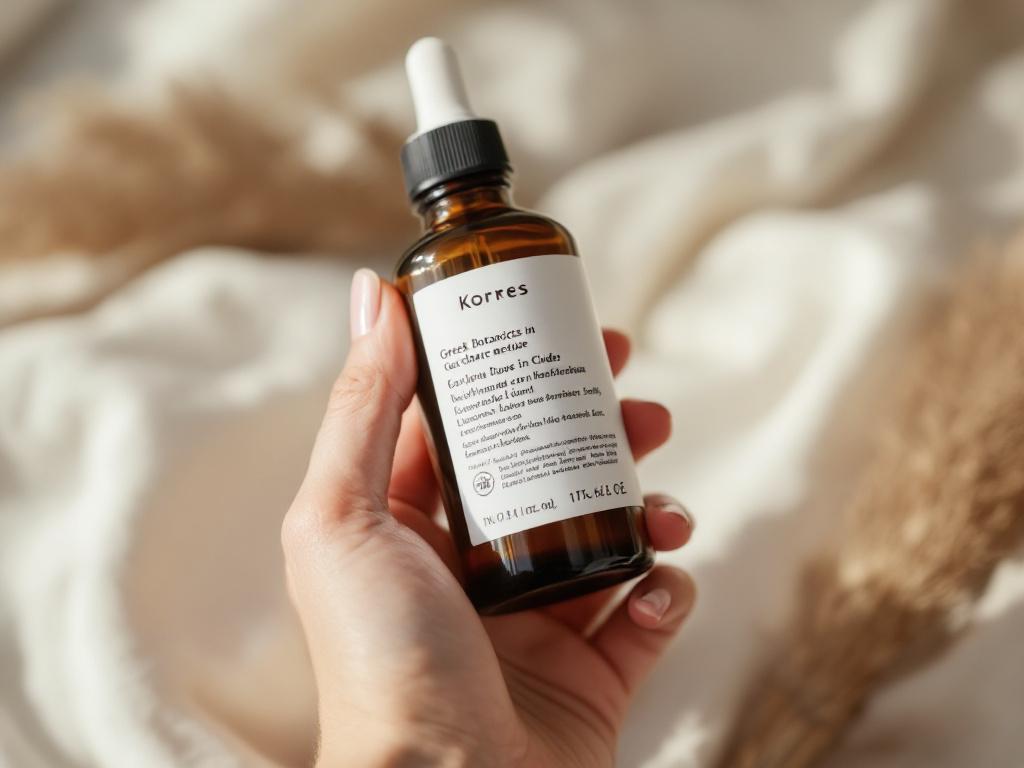
The single biggest mistake Korres buyers make is trusting a 2021 review of a product whose 2024 formula is meaningfully different. Here's a seven-step audit you can run in under five minutes, in-store or online, before any purchase.
1. Scan the exact SKU, not the line. Korres reformulates and extends lines regularly. A Wild Rose Vitamin C serum from 2020 is not the same formulation as the 2024 version. Scan the specific bottle in front of you to get the current INCI — not a write-up based on an older formula. The line name tells you the marketing positioning. The INCI tells you what's actually in the bottle.
2. Read the top five ingredients first. The top five make up the bulk of any cosmetic formula. If you're shopping a "Wild Rose serum" and rose extract doesn't appear in the top seven ingredients, you're buying a glycerin-and-water base with a marketing label. That's fine if the base is well-formulated and priced accordingly. It's not fine if you're paying a premium for "wild rose" and rose is a flavour note rather than a hero ingredient.
3. Search the INCI for fragrance markers. Look for these specifically: parfum, fragrance, limonene, linalool, citronellol, geraniol, citral, eugenol. These are among the 26 fragrance allergens the EU requires brands to disclose on the label when present above defined thresholds. For average skin, two or three of these is normal and unproblematic. For sensitive skin, rosacea, or contact-dermatitis history, more than two is a meaningful warning.
4. Flag essential oils explicitly. Anything written as a plant name followed by "oil" — lavender oil, peppermint oil, bergamot oil, rosemary oil — is an essential oil, which is bioactive and reactive. This is different from a carrier oil like jojoba or squalane. Essential oils can be fine for resilient skin and disastrous for compromised barriers. If your barrier is currently stressed — from over-exfoliation, climate change, a recent retinoid introduction — skip essential-oil-heavy products until your baseline is stable.
A botanical formula is not automatically a gentle one. Some of the strongest contact allergens in cosmetics are plants — rose, citrus, mint, lavender — and a "natural" label tells you nothing about your skin's reaction to them.
5. Check for fungal-acne triggers. For Malassezia-driven breakouts or seborrheic dermatitis, scan the INCI for fatty acid esters (most ingredients ending in -ate beyond water-soluble forms), oleic-rich oils, and certain plant butters. The botanical positioning of Korres is not protective here — in many cases the natural oils used are more problematic than the synthetic esters in a clinical brand. Verify each SKU individually.
6. Confirm the active concentration story. When Korres claims "vitamin C," check which form: L-ascorbic acid, ascorbyl glucoside, sodium ascorbyl phosphate, ethyl ascorbic acid, or another derivative. They behave differently, oxidise differently, and require different storage and packaging. The same logic applies to "retinol" — Korres typically uses gentler retinoid derivatives, which suit beginners but underdeliver for experienced users who are already tolerating higher-strength retinoids.
7. Cross-reference reformulation dates. Korres updates packaging and formulas quietly, the same way most cosmetic brands do. If a review or blog post you're relying on is older than 18 months, the formula it describes may not match the bottle in your hand. Always trust the current INCI on the actual packaging over an old write-up, even a detailed one. The label is the only document that's legally required to be accurate.
Building a Real Routine With Korres
The Layering Logic
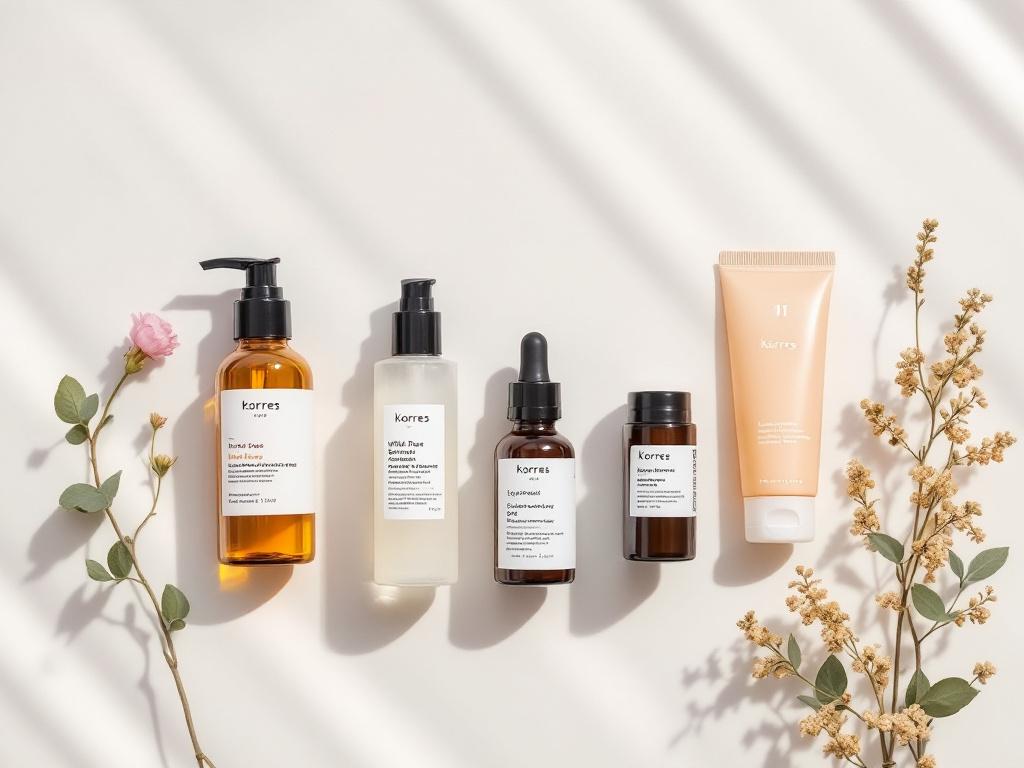
Korres lines are designed to be used together — cleanser, toner, serum, moisturiser within the same range. That's marketing convenience, not skincare law. The actual logic for routine layering is simpler and applies regardless of brand: thinnest texture to thickest, water-based before oil-based, low-pH actives early in the routine, and occlusives last to seal the layers underneath.
Practical pairing inside that logic: a Korres botanical serum layered over a hydrating non-Korres toner with hyaluronic acid or glycerin works well, because the toner addresses the water-based hydration step and the serum adds the botanical layer on top. Stacking three Korres products from the same fragranced line — a fragranced cleanser, a fragranced toner, a fragranced serum, a fragranced moisturiser — compounds the fragrance load across the entire routine. That cumulative exposure becomes an irritation risk even for skin that tolerates each product individually.
The 70/30 Rule
You do not need an all-Korres routine. A practical split for most buyers: use Korres for what botanical formulations do well — comfort textures, antioxidant support layers, occlusive moisturisers, sensory experience — at about 70% of the routine. Reserve the remaining 30% for targeted actives from specialist brands where Korres' gentle botanical positioning is a limitation rather than a feature.
Specific patterns that work, independent of brand preference: a Korres Wild Rose moisturiser as the daily base, paired with a single-active retinoid from a clinical brand for nighttime treatment. A Korres Pomegranate gel for daytime T-zone management, paired with a dedicated salicylic acid exfoliant from a brand built for that purpose. A Korres Greek Yoghurt mask as a weekly comfort step, alongside a fragrance-free daily moisturiser from a sensitive-skin specialist. The principle is the same in every case: let each brand do what it's actually designed for.
When to Skip Korres Entirely
If you have active rosacea flares, essential-oil-driven contact dermatitis, or persistent fungal-acne breakouts, Korres' formulation philosophy works against you. Default to a fragrance-free, essential-oil-free range — Avène, La Roche-Posay, or Drunk Elephant's "Suspicious 6"-free positioning — as the foundation of your routine, and only revisit Korres for occasional individual products that pass a full ingredient audit. Trying to manage a reactive condition with a fragranced botanical line is fighting the formulation, not working with it.
If you're an active-ingredient maximalist chasing specific percentages — 0.5% or 1% retinol, 15% L-ascorbic acid, 10% niacinamide, 2% salicylic acid — Korres is not the brand for that goal. The Ordinary, The Inkey List, and Paula's Choice are designed for that buyer and deliver higher concentrations at lower prices. Use Korres for what it's good at, and use the active-led brands for what they're good at.
The Quick Decision
Three questions, honest answers:
- Do you have dry, mature, or hormone-shifted skin that responds well to richer botanical formulas?
- Do you value the sensory and aesthetic experience of skincare, not just the actives list?
- Are you free of essential-oil and fragrance sensitivities, and not currently managing rosacea or fungal acne?
If you answered yes to two or more, Korres is worth testing. Start with one product, patch-test it on your inner forearm for 48 hours, then on the side of your neck for another 48 hours, and scan the INCI against your skin profile before committing to a full-size purchase.
If you answered yes to one or zero, build your base routine with brands designed for your specific constraints first, and consider Korres only for individual products that pass an ingredient audit against your sensitivities. A heritage story is not worth a flare-up.
Korres FAQ
Is Korres actually made in Greece?
The brand is Greek-founded and headquartered in Athens, per The Ecologist's 2012 founder interview and the company's own corporate pages. "Greek brand" does not automatically mean every product is manufactured in Greece, however — multinational cosmetics brands routinely use contract manufacturing across the EU and beyond. If country of manufacture matters to your purchase decision, check the small print on the packaging itself. Under EU labelling rules, country of origin must be disclosed on the product, so the label will tell you the truth regardless of what the marketing implies.
Is Korres cruelty-free and vegan?
Korres states it does not test on animals, and compliance is required anyway under EU regulations, which have banned animal testing for finished cosmetics since 2013. Not every Korres product is vegan, though. Several formulations contain beeswax, honey, milk derivatives, or yoghurt-derived ingredients — the Greek Yoghurt line being the most obvious example. Check the specific SKU's INCI rather than assuming the whole brand fits one ethical label.
Do botanical-heavy formulas expire faster than synthetic ones?
Not necessarily. Korres uses standard cosmetic preservation systems, and shelf life is broadly similar to mainstream products — typically 12 months after opening, indicated by the PAO (period after opening) symbol on the packaging, which shows a number followed by "M" inside an open jar icon. What does matter for botanical formulas is oxidation. Vitamin C derivatives, certain plant oils, and some plant extracts oxidise once exposed to air and light. Airless or opaque packaging matters more than the "botanical" status itself for preserving these ingredients.
Why does Korres use fragrance in products marketed as gentle or clean?
Because "clean beauty" has no regulated definition, and most brands using the term — Korres included — still use fragrance for sensory experience. Fragrance is not inherently dangerous, and the cosmetic industry uses it because most consumers prefer fragranced products. The relevant fact for you is that fragrance is one of the most commonly implicated contact allergens in dermatology. If you've never had a fragrance reaction, it's not a meaningful concern. If you have sensitive or reactive skin, prioritise the unfragranced SKUs in any line, including Korres.
Are Korres products good for beginners?
Generally yes, for beginners without sensitivity issues. The formulations are forgiving, the textures are pleasant, the scent profiles are appealing, and the routine structure within each line is intuitive — which lowers the barrier to building a daily habit. Beginners with reactive skin, rosacea, or fungal-acne tendencies should not default to "natural-sounding" brands as a safer starting point. The safer starting point for reactive beginners is a fragrance-free, essential-oil-free clinical line, with botanical products introduced later, one at a time, once the baseline routine is stable and the skin's normal response patterns are understood.