ZO Skincare Review: Is It Worth the Hype in 2026?
Table of Contents
- The Dr. Zein Obagi Lineage — Why ZO Isn't Obagi Medical
- ZO's Hero Products Decoded — Substance vs. Markup
- Building a Starter ZO Routine Without Spending $800
- Skin Profile Match — Who ZO Actually Serves Well
- The Real Cost of a ZO Routine — Monthly Math
- ZO vs. Prescription Tretinoin — The Decision Most Buyers Skip
- Where to Buy ZO Without Getting Counterfeits
- Your ZO Buying Brief — A Pre-Purchase Framework
You're standing at a checkout screen looking at ZO Daily Power Defense at $165 while a tab next to it shows The Ordinary's Buffet at $17.90. Nine times the price. The same skin going to receive it. You're trying to figure out whether the gap is justified — and whether the people raving about ZO on aesthetics forums know something you don't, or whether you're about to make a $600 mistake on your way to a routine you'll abandon by month four.
Here's what you actually need to know about zo skincare before that purchase. The brand was founded by Dr. Zein Obagi — yes, the same dermatologist whose name sits on the original Obagi Medical line he sold in 2007. Distribution is restricted to medical practices and authorized retailers. The cult following among aesthetics nurses is real. So is the price ceiling. But Illuminate Labs' independent ingredient review noted bluntly: "we can't find any clinical evidence supporting the brand's exfoliation claims" (Illuminate Labs).
This guide tells you which ZO Skin Health products earn their price tag, which are overpriced relative to clinical alternatives, and the specific skin profiles where ZO is the wrong investment. No brand worship. No blanket dismissal. The advice you'd get from a practitioner who has watched hundreds of buyers either thrive or quit on this brand.
Table of Contents
- The Dr. Zein Obagi Lineage — Why ZO Isn't Obagi Medical
- ZO's Hero Products Decoded — Substance vs. Markup
- Building a Starter ZO Routine Without Spending $800
- Skin Profile Match — Who ZO Actually Serves Well
- The Real Cost of a ZO Routine — Monthly Math
- ZO vs. Prescription Tretinoin — The Decision Most Buyers Skip
- Where to Buy ZO Without Getting Counterfeits
- Your ZO Buying Brief — A Pre-Purchase Framework
The Dr. Zein Obagi Lineage — Why ZO Isn't Obagi Medical
Most buyers conflate ZO Skin Health with Obagi Medical. They are separate companies with separate formulations and separate clinical positioning. Dr. Zein Obagi founded Obagi Medical in 1988, sold the company in 2007 (Valeant Pharmaceuticals acquired it), then launched ZO Skin Health in 2007 as a clean break — different formulations, different distribution, his current intellectual property.
The practical implication matters more than the corporate history. A buyer reading older skincare forums may see "Obagi Nu-Derm" recommendations and assume zo skincare is the modern equivalent. It isn't. Obagi Medical's hydroquinone-based Nu-Derm system is still sold separately, still prescribed, and still clinically distinct. If your dermatologist recommended "Obagi" in 2015, confirm which line they meant before you transfer that recommendation to a ZO purchase. The protocols don't transfer.
ZO's distribution model reinforces the medical-grade positioning. The brand sells through dermatologists, plastic surgeons, medspas, and authorized online retailers — not Sephora, not Ulta, and not Amazon. Amazon listings are typically diverted inventory or grey market product without warranty support. ZO requires a "skincare professional" registration to purchase certain SKUs directly (ZO Skin Health). For most buyers, the access path is one of three: through a dermatologist, through a licensed online reseller like SkinMedix or DermWarehouse, or through an aesthetics clinic that stocks the line.
"ZO Skin Health is Dr. Obagi's second act, not a rebrand of Obagi Medical. If your dermatologist recommended 'Obagi' five years ago, confirm which line — the formulations and protocols don't transfer."
The brand's competitive position sits in the medical-grade cosmeceutical tier alongside SkinCeuticals, SkinMedica, and Alastin. That's the relevant comparison set. Drugstore brands (CeraVe, Cetaphil, The Ordinary) and luxury-tier brands (La Mer, Augustinus Bader) are not ZO's actual rivals. ZO isn't competing on packaging or experience. It's competing on formulation potency and aesthetic-clinic endorsement — the kind of trust that comes from clinicians who match formulations to skin profiles, increasingly aided by predictive skincare tools that segment patients by tolerance and goal.
Here's where the independent assessment becomes important. Illuminate Labs' review found ZO uses several evidence-backed actives. Hydrolyzed sericin, for instance, has published research showing wrinkle reduction, elasticity improvement, and hydration support. But the same review flagged phenoxyethanol, fragrance, and artificial dyes in some ZO formulations — a meaningful concern for sensitive-skin buyers (Illuminate Labs). The brand isn't ingredient-pure in the way that, say, Skinfix or Avène's Tolerance line is. That trade-off is fine for most buyers and disqualifying for some.
Lineage and distribution explain why ZO is harder to buy and more expensive than drugstore alternatives. They don't automatically justify the spend. The next sections handle product-by-product economics — where the markup makes sense and where you're paying for a logo on a $48 cleanser that rinses off in thirty seconds.
ZO's Hero Products Decoded — Ingredient Substance vs. Premium Markup
The critical reframe for any zo skincare price evaluation: ZO isn't expensive in isolation. It's expensive against drugstore alternatives. Against its actual peer set — SkinCeuticals, SkinMedica, Alastin — ZO is often the more affordable option. The question isn't "ZO vs. cheap." It's "ZO vs. the rest of the medical-grade tier."
Here's the product-by-product breakdown of ZO's most-purchased SKUs against the closest lower-cost alternative:
| ZO Product | Price (USD) | Key Actives | Closest Lower-Cost Equivalent | Equivalent Price | Practitioner Verdict |
|---|---|---|---|---|---|
| Exfoliating Cleanser | ~$48 | Glycolic acid, vitamin E | Paula's Choice CLEAR Pore Normalizing Cleanser | ~$13 | Skip — exfoliating cleansers have insufficient contact time |
| Exfoliating Polish | ~$70 | Magnesium oxide crystals | Dermalogica Daily Microfoliant | ~$67 | Toss-up — ZO is grittier, can over-exfoliate |
| Retinol Skin Brightener 0.5% | ~$98 | Encapsulated retinol, vitamin C, plant stem cells | The Ordinary Retinol 0.5% in Squalane | ~$8 | Worth it for stability + irritation profile |
| Daily Power Defense | ~$165 | Retinyl palmitate, ceramides, DNA repair enzymes | SkinCeuticals C E Ferulic | ~$182 | Comparable tier — pick by skin type, not price |
| Growth Factor Serum Plus | ~$210 | TGF-beta1 growth factors, peptides | SkinMedica TNS Advanced+ | ~$295 | ZO undercuts comparable-tier rivals |
| Brightalive Skin Brightener | ~$148 | Non-retinol brightening complex (no hydroquinone) | The Ordinary Alpha Arbutin 2% + HA | ~$10 | More sophisticated formulation; gap not 15x worth it |
| Wrinkle + Texture Repair (0.5% retinol) | ~$155 | Higher-concentration encapsulated retinol | CeraVe Resurfacing Retinol Serum | ~$20 | Worth it ONLY if irritation-prone |
ZO's customer review data backs up the hero positioning of certain products: Calming Toner sits at 4.6 stars across 521 reviews, Retinol Skin Brightener at 4.5 stars across 246 reviews, and Brightalive at 4.3 stars across 337 reviews (ZO Skin Health).
The pattern across this matrix is consistent. ZO's pricing premium is most defensible on growth factor and high-stability retinol products, where formulation engineering — encapsulation, growth factor preservation, multi-active stabilization — is genuinely difficult and patent-protected. The premium is least defensible on cleansers and basic exfoliants, where contact time and physical action matter more than active concentration. A $48 cleanser that sits on your face for thirty seconds before going down the drain is the worst place to spend a ZO budget.
The Daily Power Defense vs. SkinCeuticals C E Ferulic comparison illustrates the core point most reviews miss. At the medical-grade tier, ZO is competitive on price — sometimes cheaper than its direct rivals. Growth Factor Serum Plus at $210 actively undercuts SkinMedica TNS Advanced+ at $295 for a comparable formulation philosophy. The buyer's real choice often isn't "spend $210 on ZO or $10 on The Ordinary." It's "spend $210 on ZO or $295 on SkinMedica."
For retinol specifically, encapsulation is the technology that justifies the price gap. Encapsulated retinol releases more gradually, reducing the irritation cascade — redness, peeling, barrier disruption — that drives most users to abandon retinol within six weeks. If you've failed The Ordinary or CeraVe retinol due to irritation, ZO's encapsulation isn't marketing fluff. It's a legitimate reason to upgrade. If you've never tried a basic retinol, you don't need ZO's encapsulation yet.

The buyer's takeaway: don't buy ZO across the board. Buy ZO where the formulation engineering is real, and substitute drugstore where you're paying for branding on a commodity category.
Building a Starter ZO Routine Without Spending $800
Most ZO consultations end with a five-to-seven product recommendation totaling $600–900. That's the bundle the clinic sells. It's not the bundle that generates 80% of the result. For the self-directed buyer, here's the realistic entry framework — what to start with, what to add only after twelve weeks of baseline data, and what to skip entirely.
- Start: Gentle Cleanser ($48) or Exfoliating Cleanser ($48). Pick gentle if your barrier is reactive, exfoliating if you have congested or oily skin. Don't buy both. This is the most replaceable product in the lineup. If budget is tight, substitute CeraVe Hydrating Cleanser ($16) without compromising the routine. Cleansers are the worst place to spend ZO money.
- Core Active #1: Daily Power Defense ($165). Morning antioxidant and barrier support. This is the product worth the splurge if you're committing to ZO. Apply 2–3 drops AM after cleansing, before sunscreen. A bottle lasts approximately four months at recommended dose, which puts the daily cost at about $1.37.
- Core Active #2: Retinol Skin Brightener 0.5% ($98). Evening retinoid. Start at 2x per week for two weeks, scale to 4x per week by week six. Skip this product if you're already on prescription tretinoin — the overlap creates irritation, not better results.
- Non-negotiable: Smart Tone SPF 50 ($65) or third-party broad-spectrum SPF. Retinoid use without daily SPF undoes the routine entirely. ZO's tinted formulation is solid, but EltaMD UV Clear ($41) is dermatology-favored and an acceptable substitute. Don't skip this. A retinoid routine without sunscreen is net-negative.
- Wait 12 weeks before adding: Growth Factor Serum Plus ($210) or Wrinkle + Texture Repair ($155). These are amplifiers, not foundation products. Adding them in week one obscures which product is actually driving — or failing to drive — results. The whole point of starting small is causal clarity.
- Skip unless prescribed by your derm: Brightalive Skin Brightener ($148) for hyperpigmentation. If pigmentation is your primary concern, a dermatologist visit plus prescription hydroquinone (compounded, roughly $40) outperforms Brightalive on stubborn melasma. Brightalive is a radiance product, not a clinical pigment-control product. Use it for tone irregularity, not for diagnosed pigmentation disorders.
- Skip entirely for most buyers: Eye creams (Intense Eye Crème, $130). Independent dermatology consensus holds that most facial moisturizers used around the eye perform equivalently. ZO's eye line is the weakest value tier in the brand. A drop of Daily Power Defense around the orbital bone gives you the same benefit as the dedicated eye cream at no incremental cost.
The realistic three-product entry routine total is $311 if you buy the ZO cleanser, or roughly $262 if you substitute CeraVe and add a third-party SPF. That's the honest ZO entry point — not the $800 consultation bundle. If those numbers still feel steep, the routine isn't financially viable for you yet, and the brand will be there when it is.
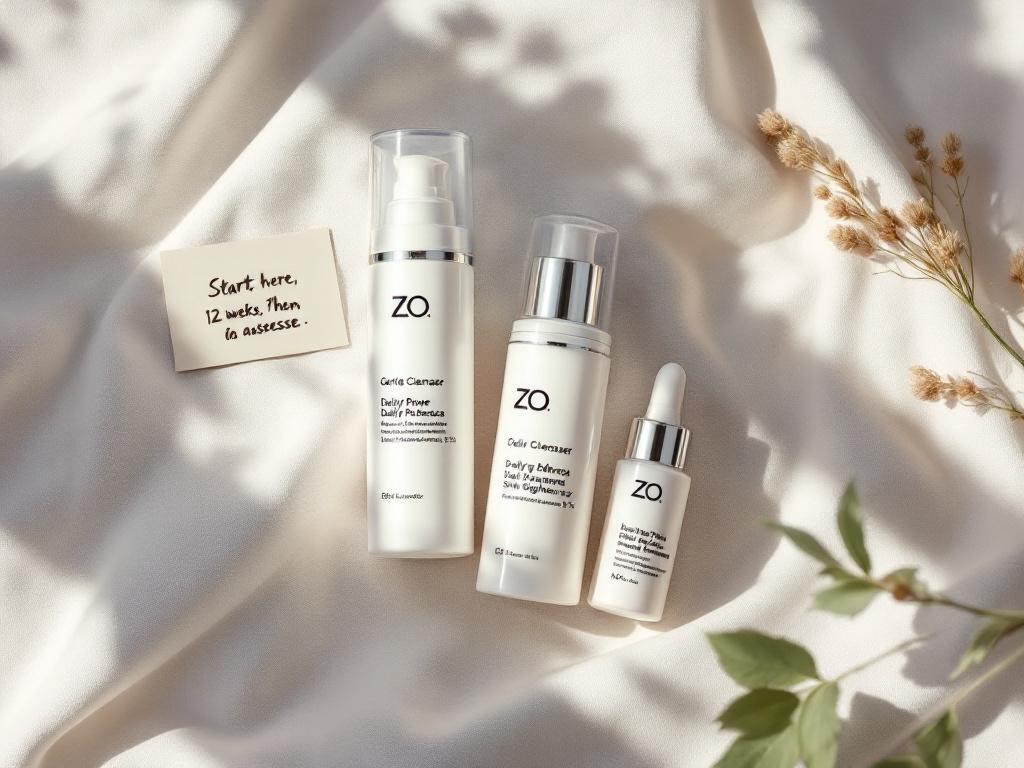
The discipline here is more important than the products. Three products, twelve weeks, baseline photographs. Then you have data. Without that structure, the brand becomes a series of impulse purchases stacked into an $800 routine you can't troubleshoot.
Skin Profile Match — Who ZO Actually Serves Well
The marketing framing of "ZO works for everyone" is wrong. The brand serves specific profiles exceptionally well, others adequately, and others poorly. The medical practitioner discussion in the Dr. Somji and Skin Specialist Elli review walks through ZO's applications across rosacea, acne, sensitive skin, fine lines, and barrier function — and is candid about where the formulations push too aggressively for some skin types (Skin Specialist Elli on YouTube).
Here's the segmented buyer reality:
- The Retinol-Sensitive Returner (STRONG FIT). You've tried The Ordinary, CeraVe, or Differin retinol and quit due to peeling, redness, or breakout cycles. ZO's encapsulated retinol delivers active more gradually. Specifically buy: Retinol Skin Brightener 0.5%. Expect tolerability where other retinoids failed and visible results in 8–12 weeks.
- The Aesthetic-Procedure Adjacent (STRONG FIT). You're getting microneedling, laser, or chemical peels at a medspa and need pre- and post-procedure homecare that won't conflict with treatments. ZO is formulated for this protocol layering, which is why clinics stock it — the brand publishes treatment-pairing guidance their providers use. Specifically: Calming Toner (4.6 stars across 521 reviews per ZO Skin Health) and Daily Power Defense.
- The Mature Skin / Photo-Damaged Buyer (STRONG FIT). Forty-plus, visible photoaging, fine lines, loss of elasticity, no acne concerns. ZO's growth factor and retinoid combination is well-suited. Specifically: Growth Factor Serum Plus and Wrinkle + Texture Repair. This is the demographic where ZO competes most credibly with SkinMedica — and at a lower price point. For buyers curious about how machine learning is starting to refine product selection across this exact demographic, the role of AI in predicting skincare needs is worth a closer look.
- The Hyperpigmentation Sufferer (PARTIAL FIT). Brightalive works on tone irregularity but is not a hydroquinone replacement. If you have post-inflammatory hyperpigmentation from acne, ZO's full pigment-control system can work. If you have melasma, see a dermatologist for compounded hydroquinone or tranexamic acid first. Brightalive at $148 is not the right starting point for clinical pigmentation disorders.
- The Acne-Prone Adult (PARTIAL FIT). ZO has an acne line but it isn't the brand's strongest category. For inflammatory acne, prescription tretinoin plus benzoyl peroxide outperforms ZO's OTC line at a fraction of the cost. ZO works as a complement to dermatology care, not a replacement. The practitioner review notes ZO can support acne-prone skin but emphasizes formulation aggressiveness as a sensitivity risk for already-inflamed skin (Skin Specialist Elli on YouTube).
- The Skincare Beginner (POOR FIT). Under 25, no specific skin concern, looking to "start a routine." ZO is wrong for you. Spend twelve months learning your skin with CeraVe, a basic sunscreen, and The Ordinary. Most ZO clients arrive after five to ten years of skincare experience. Starting at the medical-grade tier with no baseline means you can't tell what's working — and you'll waste money diagnosing your skin with $200 products instead of $20 ones.
- The Fragrance-Sensitive Buyer (POOR FIT). Several ZO products contain fragrance and phenoxyethanol per independent ingredient review (Illuminate Labs). If you've reacted to fragranced products before, ZO is not the safest choice. SkinCeuticals and Alastin offer more fragrance-free options at the same medical-grade tier.
"ZO is a tool for buyers who already know what their skin does and what it doesn't. It's not a starter brand and it's not a panacea — it's a precision instrument that demands a diagnosed problem to solve."

The honest segmentation matters because ZO is one of the easiest brands to buy badly. The clinic recommends what the clinic stocks. The aesthetician recommends what they were trained on. Neither of those filters guarantees fit for your skin profile.
The Real Cost of a ZO Routine — Monthly Math, Not Sticker Shock
The price objection most buyers raise — "$165 for a single bottle?" — is the wrong frame. Daily Power Defense at 2–3 drops per day lasts approximately four months. That puts the daily cost at roughly $1.37. The metric that matters isn't sticker price. It's monthly amortization across the entire routine, measured against the alternatives you'd actually pursue without it.
Here's the zo skincare cost breakdown across three realistic routine tiers:
| Routine Tier | Products Included | Total Outlay | Avg. Lifespan | True Monthly Cost |
|---|---|---|---|---|
| Minimum Effective | Gentle Cleanser ($48) + Daily Power Defense ($165) + Retinol Skin Brightener 0.5% ($98) + third-party SPF ($25) | $336 | 4 months | $84/month |
| Optimized Core | Above + Growth Factor Serum Plus ($210) + Calming Toner ($65) | $611 | 4 months | $153/month |
| Full Practitioner Stack | Above + Wrinkle + Texture Repair ($155) + Brightalive ($148) + Smart Tone SPF ($65) | $979 | 4 months | $245/month |
The relevant comparison anchors:
- Single dermatologist consultation: $200–400 typical (varies by region, no insurance)
- Single Botox treatment: $400–700 every 3–4 months
- Monthly tretinoin (compounded): $40–80
- Monthly SkinCeuticals equivalent routine: ~$190
- Monthly The Ordinary equivalent routine: ~$25
The Minimum Effective tier at $84/month is the honest entry point. If that number feels manageable relative to two dinners out, ZO is financially viable for you. If it doesn't, the Optimized and Full Stack tiers will erode the relationship — buyers who stretch budget on skincare typically abandon the routine within six months and lose the entire investment. Predictive routine planning tools can reduce this churn by matching commitment level to product depth before the purchase, but the underlying truth doesn't change: a routine you can't sustain produces no result.
The Optimized Core at $153/month is where most committed ZO users settle. Compared against the alternative of monthly Botox amortization ($133–233/month) or quarterly aesthetic procedures ($150–400/month), it's not unreasonable as a preventive investment — if you would have spent that money on procedures anyway. The framing test: is ZO replacing Botox in your budget, or adding to it? If replacing, the math works. If adding, reconsider.
The Full Practitioner Stack at $245/month is overkill for almost everyone. This is the territory of buyers who get clinic recommendations without questioning bundle logic. Three actives doing similar work — Retinol Skin Brightener, Wrinkle + Texture Repair, and Brightalive — creates redundancy, not stacked benefit. Pick one pigmentation product and one retinoid. Not both of each.
A note on zo skincare price that almost no review mentions: shelf life is real. ZO products generally hold formulation integrity for twelve months unopened, four to six months after opening for serums and retinoids. Oxidation accelerates after seal break, especially for the encapsulated retinol formulations. Buying multiples on sale to "stock up" is false economy if products expire before use. Buy the bottle you're using and the bottle queued behind it. Not six bottles deep.
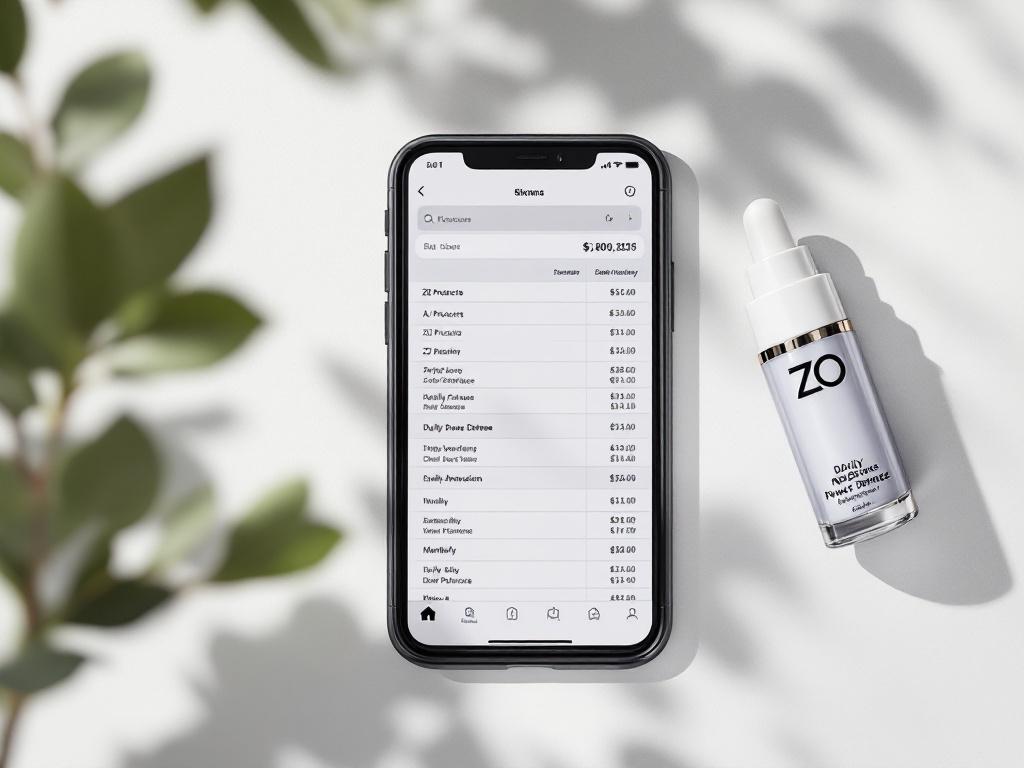
The buyer who calculates is ZO Skincare worth it as a sticker-price question gets the answer wrong. The buyer who calculates it as a monthly amortization against alternatives they'd pursue otherwise gets the right framework. $84/month for a tool that genuinely changes skin over twelve weeks is a defensible spend. $245/month for a redundant stack is not.
ZO vs. Prescription Tretinoin — The Decision Most ZO Buyers Skip
The most underdiscussed question in ZO buying: should you be on prescription tretinoin instead?
ZO Retinol Skin Brightener 0.5% is over-the-counter retinol — it converts to retinoic acid in the skin through two enzymatic steps. Prescription tretinoin (Retin-A, generic) is retinoic acid — no conversion needed, immediately bioactive. On a per-molecule basis, tretinoin is roughly twenty times more potent than retinol. That isn't a marketing claim. It's the underlying pharmacology, and it drives every comparison that follows.
Cost comparison. ZO Retinol Skin Brightener 0.5% costs $98 and lasts approximately four months — about $24.50 per month. A 45g tube of generic tretinoin 0.025% costs $25–60 with GoodRx coupons and lasts six-plus months — about $4–10 per month. The dermatologist visit runs $200–400 once, then telehealth refills typically cost $30–50 per visit. Over a year, ZO retinol runs about $294 in product. Tretinoin runs $48–120 in product plus the initial consult. The price gap isn't subtle.
Efficacy timeline. Tretinoin produces visible results in six to eight weeks but requires a four-to-six-week adjustment period of peeling and irritation that dermatologists call "retinization." ZO encapsulated retinol produces results in 8–12 weeks with substantially less irritation. The total time-to-result is similar. The patient experience during weeks one through six is not.
Who picks ZO over prescription tretinoin:
- Sensitive skin that genuinely cannot tolerate the tretinoin retinization phase
- Buyers without dermatology access (rural, uninsured, telehealth-resistant)
- Patients pairing with aesthetic procedures where their provider stocks ZO
- Buyers who failed tretinoin previously and want a gentler reattempt
Who should choose prescription tretinoin over ZO:
- Inflammatory acne (tretinoin is FDA-approved for acne; ZO retinol is not)
- Significant photodamage where speed matters
- Budget-conscious buyers who can tolerate the adjustment period
- Anyone willing to invest 4–6 weeks of adjustment for a 75%-plus cost reduction
The combination protocol some clinicians use is worth understanding because it changes the ZO vs tretinoin framework entirely. Aesthetic providers often layer ZO support products — Calming Toner, Daily Power Defense — over prescription tretinoin. ZO handles barrier repair and antioxidant support while tretinoin does the heavy retinoid work. The math: roughly $40/month tretinoin plus roughly $84/month in ZO support products equals about $124/month for a routine that outperforms either standalone approach. The practitioner discussion supports this layering philosophy for procedure-adjacent care (Skin Specialist Elli on YouTube). Emerging AI-driven skincare diagnostics are starting to model individual tolerance for retinoid intensity, which makes the layering decision more precise than the trial-and-error approach most patients run on themselves.
The ZO retinol advantage that's real, even after the tretinoin comparison: encapsulated retinol stays stable in the bottle longer, releases more gradually on the skin, and pairs better with active actives — vitamin C, AHAs, niacinamide — without amplifying irritation. If you're building a multi-active routine and don't want to manage tretinoin's sensitization period across multiple ingredient interactions, ZO is a defensible choice. Not just a luxury one.
"If you have dermatology access and tolerable skin, prescription tretinoin will outperform ZO retinol on cost and speed. ZO retinol earns its place when your skin or your access doesn't permit tretinoin — not as a cosmetic upgrade."
The decision tree is simple. Try tretinoin first if you have access and reasonable barrier tolerance. If the retinization phase breaks you or you can't access a prescriber, zo skincare is the next-best option — and a defensible one. What you shouldn't do is buy ZO retinol without having considered tretinoin. That's the unforced error this section exists to prevent.
Where to Buy ZO Without Getting Counterfeits
Counterfeiting is a real problem for medical-grade brands. ZO is no exception. The buyer protection workflow runs in sequential decision order — skip a step and you compound the risk.
Step 1: Skip Amazon entirely. ZO does not authorize Amazon sellers. Listings exist via diverted inventory — legitimate product sold outside authorized channels, often expired or temperature-mishandled — or outright counterfeits. Brand warranty does not apply to Amazon purchases. The "third-party seller, fulfilled by Amazon" structure provides zero authentication guarantee.
Step 2: Verify the seller is on ZO's authorized list. The legitimate channels are: a dermatologist's or plastic surgeon's office, a medspa with a licensed practitioner on staff, or online retailers that explicitly state "authorized ZO retailer" with verification you can confirm. SkinMedix and DermWarehouse are commonly cited as legitimate online resellers. Confirm current authorization status directly with the brand before any purchase — authorized retailer lists change.
Step 3: Check the lot code and expiration on arrival. Authentic ZO products carry a printed lot code on both the carton and the tube. Counterfeits often have mismatched codes between carton and product, or no expiration date at all. If anything is illegible, stickered over, or appears reprinted, return immediately and dispute the charge.
Step 4: Inspect formulation texture and scent. ZO's encapsulated retinol products have a characteristic light-yellow tint and a faint formulation scent. Pure white, scent-free products labeled as ZO retinol are red flags. Daily Power Defense should have a slight green-yellow tint, not water-clear. If the product looks generic, it probably is.
Step 5: Register through your provider for ZO Skin Health Circle. The brand's loyalty program requires authentic-purchase verification through an authorized provider. If a seller can't enroll you, the product likely isn't authorized. This is a useful authentication shortcut: an Amazon purchase will never enroll you, and that's by design.
Step 6: For first-time buyers, schedule a single consultation before bulk purchase. A 30-minute aesthetician or dermatology consultation costs $50–150 in most markets and validates three things at once: ZO is right for your skin, the specific products you should start with, and you have an authentic source. That's cheaper than a wrong $400 product bundle, and far cheaper than a counterfeit that triggers a reaction.
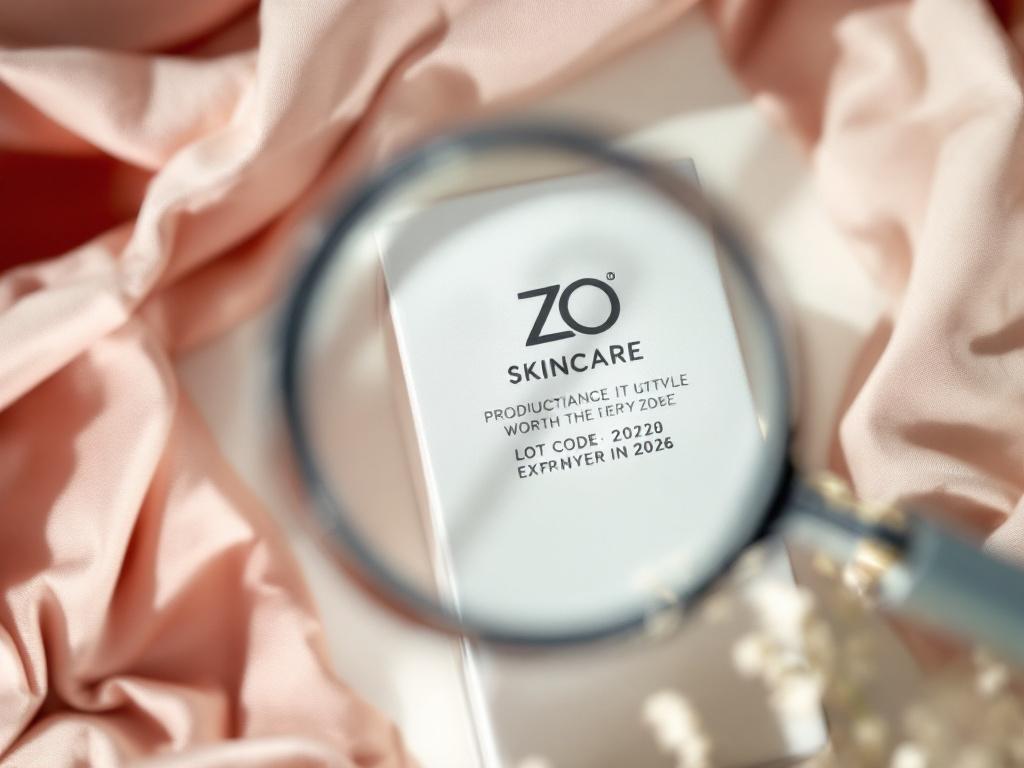
The buyer who treats authentication as paranoia ends up with diverted inventory, expired actives, or worse. The buyer who treats it as a six-step procedure spends an extra ten minutes once and protects every purchase that follows.
Your ZO Buying Brief — A Pre-Purchase Decision Framework
Before you spend a dollar on zo skincare, run the ten-point check below. This is the framework a senior practitioner would walk you through before approving the purchase — direct, unsentimental, and honest about when the answer is no.
- You have a specific skin concern with a name. "I want better skin" is not enough. "I have post-inflammatory hyperpigmentation from cystic acne" is enough. Without a defined target, you cannot evaluate ZO's results. The brand is a tool, and tools require diagnosed problems.
- You've spent at least 6 months on a basic routine. Gentle cleanser, moisturizer, SPF, and one active — any retinoid. If you haven't established this baseline, ZO is premature. You'll waste expensive products diagnosing what cheap products would have diagnosed faster.
- You've ruled out prescription alternatives. For aging: tretinoin. For acne: tretinoin plus benzoyl peroxide. For melasma: hydroquinone or tranexamic acid. ZO competes with prescription options. It doesn't categorically beat them.
- You can sustain $84/month minimum for 12 weeks. That's the Minimum Effective tier amortized. If this number creates financial stress, the routine will fail mid-cycle and waste the investment. The brand will exist in three months; your budget needs to as well.
- You're not fragrance-sensitive or phenoxyethanol-reactive. If you've reacted to either ingredient class before, ZO's formulation profile may not suit you. Confirm with your dermatologist or do a 14-day patch test on the inner forearm before committing to facial use.
- You have an authorized purchase channel identified. Dermatologist, medspa, or verified online reseller. Not Amazon, not eBay, not an Instagram account selling at a suspicious discount. Authenticated source or no purchase.
- You're committing to daily SPF without exception. Retinoid use without sunscreen is net-negative — you accelerate photodamage faster than the retinoid repairs it. This is non-negotiable. If you won't commit to daily SPF, don't start the routine.
- You're starting with three products, not eight. Cleanser substitute (or ZO cleanser) plus Daily Power Defense plus Retinol Skin Brightener 0.5%. Add nothing for twelve weeks. The point of the small start is causal clarity — you can't troubleshoot an eight-product routine.
- You've photographed your starting point. Front, left profile, right profile, even lighting, no filter, no makeup. Without baseline photos, you cannot judge results. Memory is unreliable for incremental change, and twelve weeks of subtle improvement is invisible day-to-day. The photographs are the only objective record you'll have.
- You've set a 12-week reassessment date on your calendar. At week twelve, evaluate against the photos. Is this working? Continue, modify, or discontinue. ZO is not a lifetime commitment. It's a tool you assess on outcomes, and the assessment date forces honesty about whether the spend is producing the result.
If you can't check 8 of these 10 boxes, postpone the purchase. The brand will still be there in three months. Your skin — and your budget discipline — will be in better shape to evaluate it after you've handled the prerequisite work.
If you can check 9 or 10 boxes, you're the buyer ZO was designed for. Start with the three-product entry routine, find your authorized channel, photograph your baseline, and execute. The framework is the marketing. The brand either earns its position in your routine over twelve weeks or it doesn't, and now you have the structure to tell the difference.