Best Retinol Skincare Products: The Best Retinol Skincare Products of 2026, Analyzed Ingredient by Ingredient
Every year the same headlines resurface: this serum is the one, that cream will erase a decade, this new formula finally beat the classics. In 2026 the noise around the best retinol skincare products is louder than ever, and most of it treats retinol like a single magic ingredient that works identically on every face. It doesn't. A retinol serum that transforms your neighbor's skin can leave yours flaking, red, and quietly breaking out along the jaw. The real question is never "which product is best?" but "which product is best for the skin you actually have?"
That is where we come in. Macherre reads the full ingredient list for you, translates it into plain language, and gives each product a single compatibility score tied to your skin type and sensitivities. You don't need to know the difference between an ester and an emollient. You scan, you read, and you decide with evidence instead of marketing copy. This guide walks through how to find your own best retinol product by looking at what is genuinely inside the bottle.
Table of contents
- What makes a retinol product "the best" for you
- How we break down retinol products ingredient by ingredient
- Choosing your retinoid: retinol, retinal, and gentler options
- Matching retinol formulas to your skin type and concerns
- Building a safe night routine around retinol
- Finding affordable dupes for hyped retinol products
- Frequently asked questions
What makes a retinol product "the best" for you
Retinol is a vitamin A derivative, and its reputation is earned. It is one of the most studied cosmetic actives for smoothing fine lines, softening uneven tone, and supporting clearer skin, largely because it encourages faster cell turnover and helps stimulate collagen over time. Beauty editors and dermatologists routinely call it a gold-standard anti-aging ingredient, and the Wirecutter retinol guide reflects that consensus. So the benefit side is not really in doubt.
The complication is that retinol also comes with a predictable cost when it is used carelessly: dryness, flaking, stinging, and redness, especially for people who are new to it or who have reactive skin. That is exactly why a "strongest formula wins" mindset misfires. The most potent product on a best-of list is frequently the worst choice for a beginner, for sensitive skin, or for anyone whose barrier is already stressed.
So "best" splits into several personal variables that a headline can never capture:
- The type of retinoid in the formula, since retinol, retinaldehyde, and gentler cosmetic retinoids behave differently.
- The supporting ingredients around the active, because ceramides, niacinamide, hyaluronic acid, and soothing agents change how tolerable a product feels.
- Your skin type and sensitivities, from oily and acne-prone to dry, rosacea-prone, or fungal-acne-prone.
- The routine you plan to slot the product into, because the wrong pairing can turn a fine product into a source of chronic irritation.
Once you accept that "best" is personal, the useful work shifts. Instead of chasing a ranking, you learn to read a formula against your own profile. That reading is the entire point of what follows.
How we break down retinol products ingredient by ingredient
An ingredient list looks intimidating because it is written in INCI names, ordered by concentration in ways that aren't obvious, and padded with terms that mean nothing to most shoppers. We turn that wall of text into something you can act on.
Start with the tool that does the heavy lifting. Paste a label or scan a product into our ingredient checker and INCI decoder, and you get a plain-language breakdown of every component: which ingredient is the retinoid, which ones hydrate, which ones support the barrier, and which ones might irritate. Fragrance, drying alcohols, and known sensitizers get surfaced so you are not guessing. For anyone who has ever stared at a bottle wondering whether "the good stuff" is even present in a meaningful amount, this is the shortcut.
If you are standing in a shop or holding a product you already own, our cosmetic barcode scanner pulls the ingredient list and compatibility score in seconds. That matters for a 2026 best-of season, because it lets you test the hyped product against your own skin profile before you pay for it, rather than after you've broken out.
Every product also earns a single compatibility score. Think of it as a summary of how well a formula fits the skin type and sensitivities you've told us about. The same retinol serum can score very differently for oily, acne-prone skin than for dry, rosacea-prone skin, and that difference is the honest reflection of reality that a universal ranking flattens away. We won't pretend to reveal the exact internal weighting behind the number; the useful part is that it condenses a lot of ingredient interaction into one readable signal.
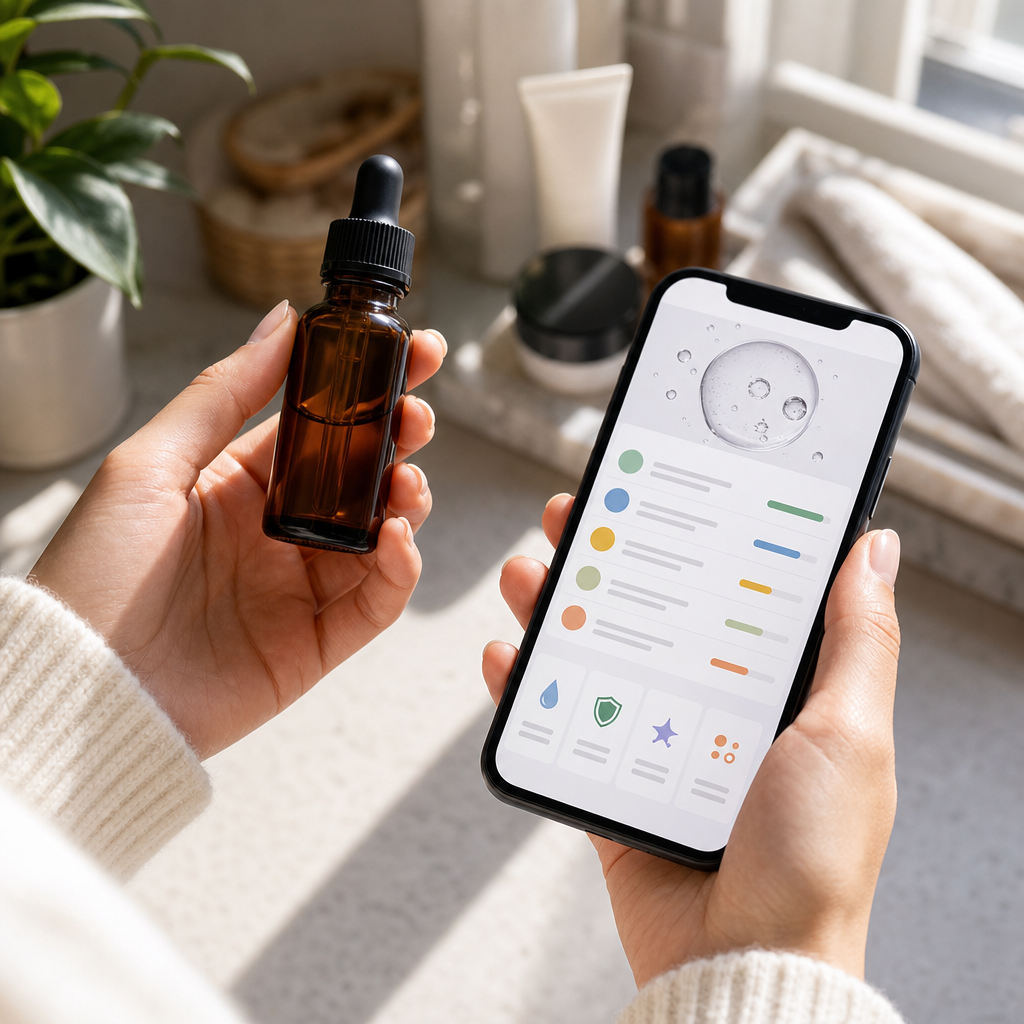
When you want to understand a single confusing name, our ingredient dictionary explains it in non-technical language and puts it in context for sensitive skin. This is what "analyzed ingredient by ingredient" actually means in practice: not a lecture on chemistry, but a translation you can read in a minute and use to make a call.
Choosing your retinoid: retinol, retinal, and gentler options
The word "retinol" gets used loosely, but the bottle in front of you may contain one of several vitamin A derivatives, and the choice genuinely affects your results and your comfort.
Retinol is the classic. It is widely available, well evidenced, and effective, but it acts more slowly because the skin has to convert it through several steps before it becomes active. That gradual pace is part of why it is so often recommended for beginners and for general anti-aging.
Retinaldehyde, usually shortened to retinal, sits one conversion step closer to retinoic acid, so it acts faster in the skin. Independent guides on retinal serums describe it as biologically closer to the active form, with one detailed roundup noting that retinal in the 0.05 to 0.2 percent range can act roughly eleven times faster than retinol while often being well tolerated thanks to modern encapsulation and soothing bases. Retinal products are also frequently sold in stepwise strengths, such as 0.03, 0.06, and 0.10 percent, which lets you climb the ladder as your skin adapts.
Gentler cosmetic retinoids, such as certain retinyl esters, tend to be milder and less studied. They are often positioned for very sensitive or cautious users who want to introduce vitamin A slowly.
Here is the catch that marketing rarely mentions: the front label is not a reliable guide to which retinoid you're getting or how much. The dependable answer lives in the ingredient list. Run a candidate through the ingredient checker to confirm whether it names retinol, retinaldehyde, or an ester, and then put two contenders next to each other with our side-by-side comparison tool. Seeing the retinoid type, any declared strength, and the surrounding support ingredients in one view makes the retinol-versus-retinal question concrete instead of theoretical.
A practical rule of thumb from the evidence: beginners and reactive skin usually do well starting with a lower-strength retinol in a supportive base, while experienced users or those chasing faster change may reach for stronger retinol or a well-formulated retinal. There is no universal winner here, only a match to your tolerance and your goals.
Matching retinol formulas to your skin type and concerns
The active is only part of the story. Beauty editorials repeatedly stress that the vehicle, whether a light serum or a rich cream, and the support ingredients around it strongly shape how a product feels day to day. The Elle roundup of retinol creams highlights fragrance-free formulas for sensitive skin and hydrating, barrier-supporting bases for dry or mature skin for exactly this reason. Your skin type decides which of those details are dealbreakers.
Oily and acne-prone skin. Your risk is not usually the retinol; it is the heavy emollients and occlusives some retinol creams lean on. Those can sit in pores and contribute to breakouts. Before committing, send each candidate through our pore-clogging checker to see which ingredients are commonly tied to clogged pores. It is worth remembering that "non-comedogenic" is not a regulated claim and that comedogenicity depends on concentration and the surrounding formula, not on a single scary name.
Dry, sensitive, and rosacea-prone skin. Here you want the opposite emphasis: creamy textures, robust hydration from glycerin and hyaluronic acid, barrier support from ceramides, and calming actives like panthenol, allantoin, or centella. You also want fewer irritants, which usually means avoiding added fragrance and harsh alcohols. The ingredient checker flags those potential triggers so a soothing-sounding "gentle" serum can't sneak an irritant past you.
Fungal acne and seborrheic dermatitis. This is where rich anti-aging formulas can quietly backfire. Many are loaded with esters and oils that can feed Malassezia yeast and worsen flares. Our seborrheic dermatitis trigger checker scans a formula for those common triggers so you can rule out a product before it undoes weeks of progress. For this group, a beautiful ingredient list on paper can still be the wrong choice, and the checker is the fastest way to know.
This is also why age- and skin-type-segmented "best" lists exist across the market: there simply is no single product that suits every tolerance threshold and concern. Our compatibility score exists to serve that same reality, but tuned to your specific profile rather than a generic bracket.
Building a safe night routine around retinol
A product is only as good as the routine it lives in. Dermatologist-informed guidance is consistent on the fundamentals: use retinol at night, start with a low concentration only a few evenings a week, then increase frequency slowly as your skin adapts, and wear sunscreen every day because retinoids can leave skin more vulnerable to UV damage. The Wirecutter guide lays out this low-and-slow approach clearly, and it is the single most reliable way to avoid the flaking and redness that make people abandon retinol too early.
The other frequent mistake is stacking. Layering a strong retinoid with high-percentage acids, benzoyl peroxide, or multiple exfoliating steps is a common route to a damaged barrier, and marketing copy almost never warns you about the combination. Our routine creator with clash detection lets you drop your chosen retinol into your existing lineup and surfaces the conflicts you might not spot on your own, such as an acid toner already sitting in your evening steps.
The best retinol product is the one your skin can keep using without chronic irritation, inside a routine that doesn't fight itself.
A sensible starting structure for most people is a gentle cleanser, the retinol product, and a barrier-supporting moisturizer at night, with sunscreen as the non-negotiable morning step. On non-retinol nights you can lean on hydration and soothing ingredients to help the skin recover. If you're unsure whether a second active belongs in the routine at all, the clash detection view is a faster answer than trial and error on your own face.
Finding affordable dupes for hyped retinol products
The 2026 best-of lists love an expensive hero product, and sometimes that hero is genuinely well formulated. The problem is the price tag, not always the formula. Market roundups routinely place a costly signature serum next to more affordable options with strikingly similar ingredient profiles, which is your opening.
Once you've identified a retinol product that scores well for your skin, run it through our dupe finder to surface ingredient-similar alternatives across different price points. Because the matching is based on the actual formula rather than branding, you can often find a product that behaves comparably for a fraction of the cost. Pair the dupe finder with our side-by-side comparison view to confirm that a cheaper option really does keep the retinoid type and the soothing, barrier-supporting ingredients that made the original worth buying, rather than dropping them to hit a lower price.
This systematic dupe hunting used to require chemistry knowledge and a lot of patience. Now it is a two-tool workflow: find similar formulas, then compare them ingredient by ingredient and check the score against your profile. Budget-conscious shoppers get the same benefits without paying for the name on the box.
A short, repeatable path pulls all of this together. Define your goal and starting level, scan a few contenders, decode each one, check the pore-clogging and seborrheic dermatitis risks that apply to you, compare the finalists side by side, read reviews filtered by skin types like yours, fit the winner into a clash-free routine, and then look for a dupe if you want to spend less. Each step maps to a tool, so nothing depends on you memorizing ingredient names.
Frequently asked questions
I'm a complete beginner. Which retinol should I start with?
Most beginners do well starting with a lower-strength retinol in a hydrating, barrier-supporting base rather than the strongest formula on a best-of list. Use it only a couple of nights a week at first and build up slowly. Before you buy, scan the candidate with our ingredient checker to confirm it contains gentle support ingredients and few irritants, and check its compatibility score for your skin profile.
Is retinal actually better than retinol?
Not better for everyone, just faster acting. Independent guides describe retinal as one conversion step closer to the skin's active form, so it can work more quickly, and well-formulated versions are often well tolerated. Whether that speed suits you depends on your tolerance and goals. Put a retinal and a retinol side by side in our comparison view to see the retinoid type, any declared strength, and the soothing ingredients before deciding.
I have fungal acne or seborrheic dermatitis. Can I still use retinol?
Often yes, but the formula matters far more than usual. Many rich retinol creams contain esters and oils that can feed Malassezia yeast and trigger flares. Run any product through our seborrheic dermatitis trigger checker before committing, and lean toward lighter formulas with fewer of those triggers.
Can I use retinol with vitamin C, acids, or benzoyl peroxide?
Be cautious. Stacking retinol with high-percentage acids, benzoyl peroxide, or heavy exfoliation is a common cause of irritation and a compromised barrier. Rather than guessing, build your lineup in our routine creator so clash detection can flag risky combinations and help you separate strong actives across different steps or nights.
How long until I see results?
Retinol works gradually because it relies on cell turnover and collagen support over time, so expect weeks to months rather than days, and expect some early dryness or flaking as your skin adjusts. Using it consistently at a frequency your skin tolerates matters more than using a very high strength. If irritation is constant, that is a signal the product or the routine is wrong for you, not a sign it is working.
Do I really need to analyze every ingredient, or just the retinol percentage?
The percentage alone won't tell you how a product will treat your skin. Support ingredients decide tolerability, and hidden irritants or pore-clogging components decide whether you break out. Reading the whole list is exactly what our tools automate, so "analyze every ingredient" takes a scan and a glance rather than a chemistry degree.
Your next move is simple: pull up a retinol product you already own or one you're eyeing for 2026, scan it, and read what's really inside. Let the compatibility score, the pore-clogging check, and the ingredient breakdown tell you whether it fits the skin you have, and then build it into a routine that won't fight back.