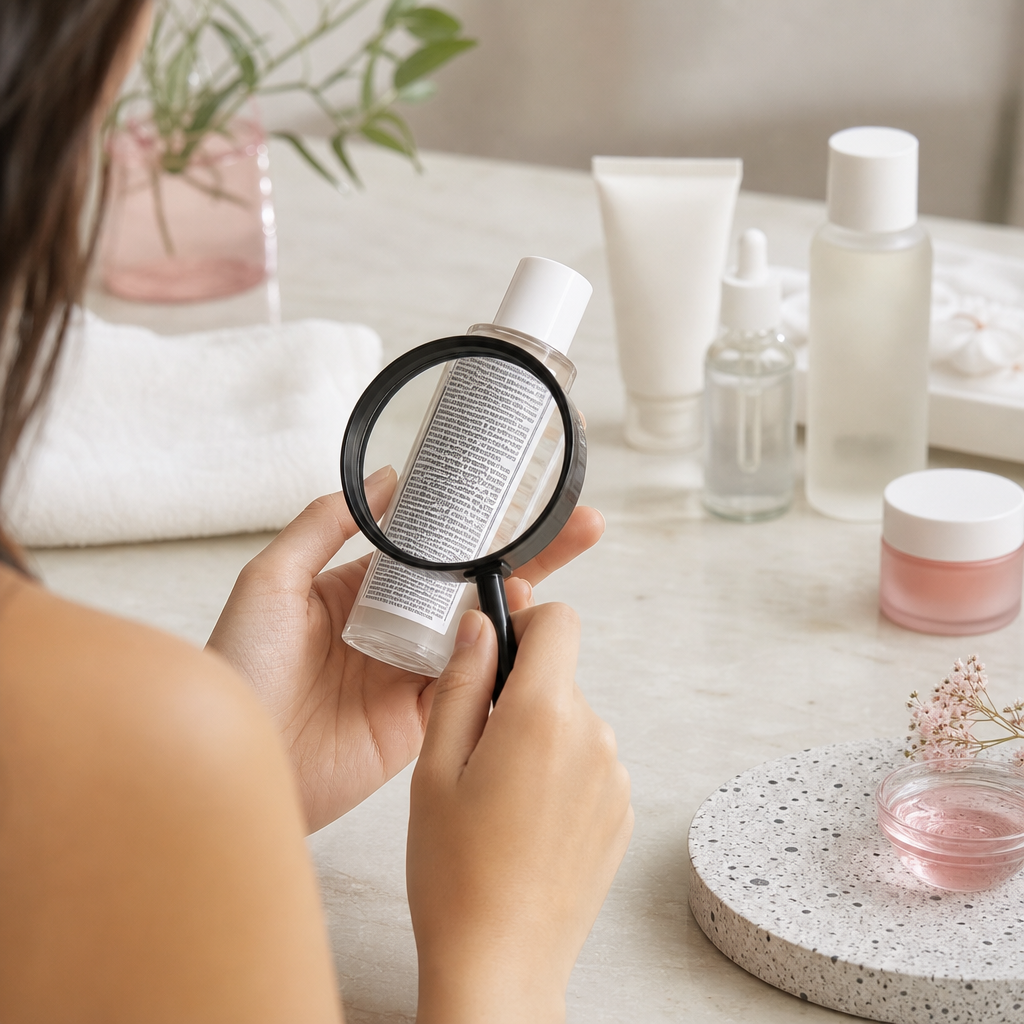
Comedogenic Ingredient Checker: How to Instantly Spot Pore-Cloggers
A comedogenic ingredient checker is a tool that reads your product's ingredient list and instantly flags the ingredients most likely to clog pores and trigger breakouts. Instead of memorizing which oils and esters cause trouble, you scan or paste the label and see the pore-cloggers highlighted in plain language. That is exactly what our pore-clogging checker does inside Macherre, so you can see what's really hiding behind a "non-comedogenic" label in seconds.
Most people discover pore-clogging ingredients the slow way: a new moisturizer, three weeks of small bumps, and no idea which of the twenty-odd ingredients on the back of the tube caused them. A checker collapses that guessing game into a single glance at the label, before the product ever touches your skin.
Table of contents
- What a comedogenic ingredient checker is and how it works
- Types of comedogenic checkers, and where Macherre fits
- Why spotting pore-cloggers matters for your skin type
- What to consider when you read comedogenic flags
- Your next decision: put a checker to work on your routine
- Frequently asked questions
What a comedogenic ingredient checker is and how it works
Comedogenic simply means "tending to form comedones" — the clogged hair follicles you see as blackheads and whiteheads. An ingredient earns that label when it has shown a tendency to promote comedone formation, particularly on oily or acne-prone skin. A comedogenic ingredient checker takes that idea and applies it to a real product label so you don't have to.
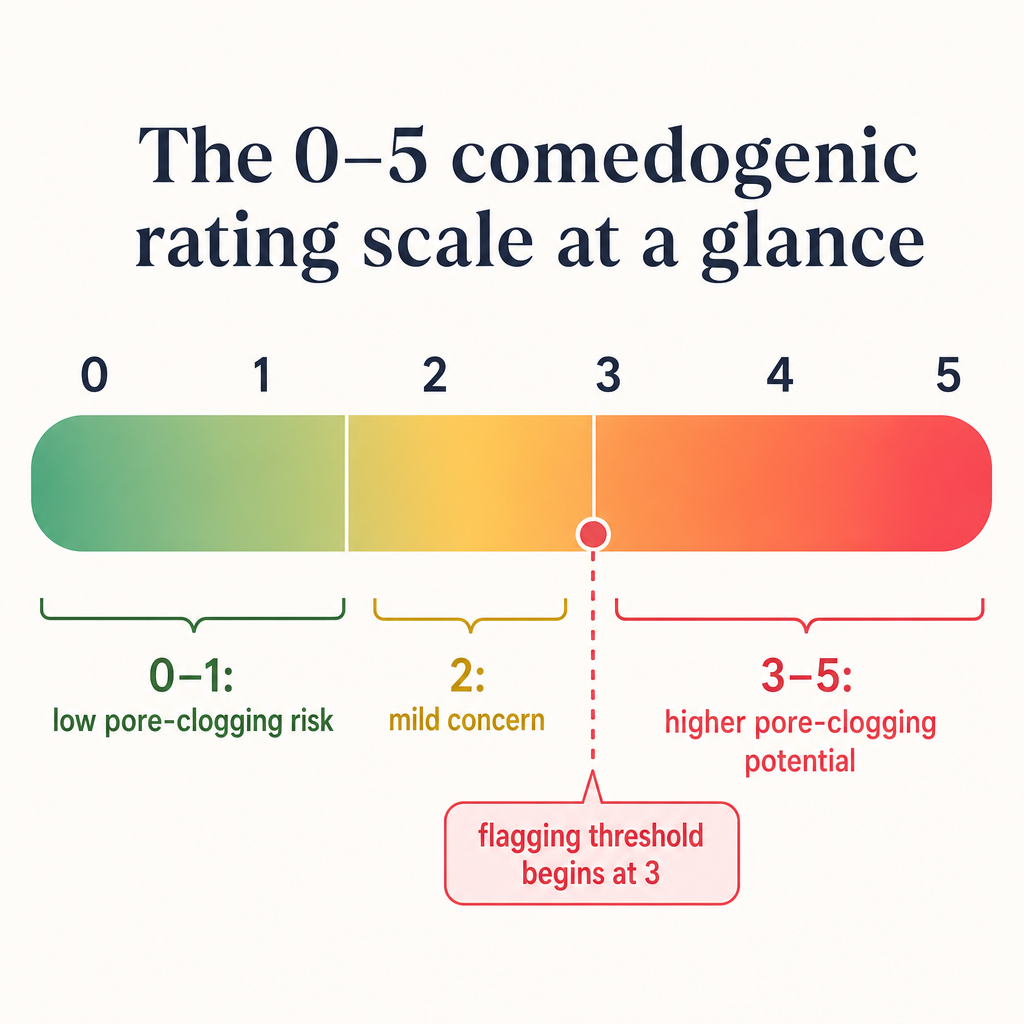
The mechanism is straightforward. The checker reads a product's INCI list — the standardized ingredient names printed on the packaging — and matches each ingredient against a comedogenicity database. Ingredients carrying a higher risk are flagged, and the ones with a track record of being gentle on pores are left clear. Many consumer resources describe this using a 0–5 comedogenic rating scale, where ingredients rated 3 or above are treated as higher-risk for clogging pores. Cross-referencing a full ingredient list against that kind of rating database is the core of every credible checker.
Inside Macherre, we take one extra step that matters for beginners: we don't just flag an ingredient, we explain it. Our ingredient checker translates each INCI name into plain language — what it is, what it does in the formula (an emollient, a surfactant, a preservative), and why it might clog pores, feed breakouts, or be perfectly safe for your skin. That decoding is the difference between a red flag you can act on and a scary chemical name you can't.
We also roll everything into a single compatibility score per product. So rather than staring at a dozen separate ratings, you get one clear read on how a product fits your skin, with the pore-clogging concerns spelled out underneath it.
Types of comedogenic checkers, and where Macherre fits
Not every checker answers the same question. The most useful way to understand your options is by how much context they take into account, because a single ingredient rating and a whole-routine view tell you very different things.
An ingredient-level lookup answers "is this one ingredient a pore-clogger?" You search a single INCI name and see its typical rating and behavior. This is handy when you already suspect a specific culprit — a particular plant oil or fatty acid ester that keeps showing up in products that break you out.
A product-level checker answers "does this whole product carry pore-clogging risk?" You scan or paste the entire ingredient list, and the tool flags the pore-cloggers in context. This is usually more accurate, because one moderate-risk ingredient near the end of a rinse-off cleanser matters far less than several high-risk emollients concentrated in a heavy leave-on cream. Our cosmetic barcode scanner is the fastest way in here — instead of copying an INCI list by hand, you scan the barcode and the flags appear.
A routine-level view answers the question most enthusiasts actually have: "does my whole shelf make sense together?" This is where Macherre goes beyond a single-product yes or no. Our routine builder with clash detection shows whether several products stack similar pore-cloggers, and whether those risks collide with other triggers like fungal acne or seborrheic dermatitis. A cleanser, serum, moisturizer, and sunscreen can each look fine alone and still add up to a pore-clogging problem when layered.
| View | What it tells you | When it helps |
|---|---|---|
| Ingredient-level | Whether a single ingredient tends to clog pores | You already suspect one culprit |
| Product-level | Whether a full formula carries pore-clogging risk in context | Deciding on a new product before you buy |
| Routine-level | Whether products stack risks or clash with other triggers | Building or auditing a multi-step routine |
Macherre supports all three, and our pore-clogging checker sits at the center of it — a product-level scan that calls out comedogenic ingredients, then connects up to the routine view when you're ready to look at the bigger picture.
Why spotting pore-cloggers matters for your skin type
The same red flag means different things depending on who is reading it, and that's the whole reason personalization exists in a checker.
If you're new to skincare, the biggest obstacle is language. INCI lists read like a chemistry exam, and marketing copy fills the gaps with reassuring words that don't have to mean anything. A checker that translates jargon into plain explanations and summarizes everything into one compatibility score gives you a starting point you can actually trust, without needing to learn cosmetic chemistry first.
If you have acne-prone or oily skin, pore-clogging ingredients are the direct line between a product and a breakout, so being able to screen a formula before it reaches your face is genuinely useful. It won't cure acne, but it removes one variable you can control.
If you live with a sensitive-skin condition — fungal acne, rosacea, eczema, or seborrheic dermatitis — pore-clogging is rarely the only concern. You often need to avoid ingredients that clog pores and feed Malassezia yeast and aggravate an already-compromised barrier, all at once. That's why we don't treat comedogenicity in isolation. Alongside the pore-clogging checker, we run a seborrheic dermatitis trigger checker and a fungal-acne checker, so the flags you see reflect your actual skin, not a generic profile.
If you're a budget-conscious shopper or dupe hunter, a checker does quiet but important work: it confirms whether a cheaper alternative is genuinely comparable in pore-clogging risk, not just similar on its headline active. Two products can share the same star ingredient and behave completely differently once you look at the base formula.
And if you're an enthusiast optimizing a multi-step routine, the concern moves from any single product to how everything stacks. That's the routine-level view — the difference between "is this safe?" and "does all of this make sense for my skin together?"
What to consider when you read comedogenic flags
A comedogenic rating is a useful signal, not a verdict. Reading the flags well means understanding what the number can and can't tell you.
Start with the limits of the rating itself. Comedogenicity ratings historically came from small-scale tests — animal models like the rabbit ear test, and limited human patch studies. Those test conditions rarely match how a product sits on your face. Whether an ingredient actually clogs your pores in real life depends on its concentration, the vehicle it's carried in (a light gel behaves differently from a rich oil), the total formula, and how the product is used. A moderately comedogenic ingredient in a rinse-off cleanser has far less time and opportunity to cause trouble than the same ingredient in a leave-on cream.
That leads to product type and context. A good checker treats a cleanser, a moisturizer, and a sunscreen differently, because they don't behave the same way on skin. When you read a flag, ask whether it's coming from a leave-on product where it lingers, or a rinse-off product where its contact time is short.
Consider how unknowns are handled. New synthetic molecules and less common plant esters may not appear in older rating tables at all. The honest approach is to label those clearly rather than quietly assume they're safe — an unrated ingredient is not the same as a low-risk one.
Finally, weigh the "non-comedogenic" label itself. The term isn't backed by a single, universally enforced definition, so a product can carry it and still contain ingredients that test as moderately comedogenic. That's not necessarily deceptive — it just means the label is a claim, not a guarantee. An ingredient-level checker lets you verify what's actually inside rather than taking the front of the box at its word. If you want to understand exactly what that label promises and where it falls short, our deep dive on what "non-comedogenic" really means for acne-prone skin unpacks the gap between marketing and formula.
One boundary worth stating plainly: a checker is a screening tool, not a diagnosis. If your acne is severe or persistent, a dermatologist should still be part of the picture. Screening ingredients helps you make calmer buying decisions; it doesn't replace medical care.
Your next decision: put a checker to work on your routine
Once you understand what the flags mean, the practical question is where to point the tool first. If a specific product keeps breaking you out, run it through our pore-clogging checker and read the flagged ingredients before you decide whether to keep it. If you'd rather not type out a label, scan the barcode instead and let the results come to you.
When you want to see the whole picture — how your cleanser, serum, moisturizer, and sunscreen interact — the routine builder shows where pore-cloggers stack and where they clash with other triggers. And if a checker turns up a product that isn't working for you, our dupe finder and side-by-side comparison help you weigh alternatives on their real ingredient profile rather than their marketing.
For a walkthrough of using a checker in practice, the companion article on how to instantly spot breakout triggers in any product covers the hands-on detail. This explainer is here to make the results make sense; that one shows you the workflow.
Frequently asked questions
What does a comedogenic rating of 3 actually mean?
On the common 0–5 scale, a rating of 3 sits in the range many consumer resources treat as higher-risk for clogging pores. It reflects how the ingredient behaved in testing, not a guarantee that it will break you out. Concentration, the rest of the formula, and your own skin all influence the real outcome, so treat 3-and-above as a reason to look closer rather than an automatic disqualification.
Can a "non-comedogenic" product still break me out?
Yes. "Non-comedogenic" isn't tied to a single enforced standard, so a product can carry the label and still include ingredients that test as moderately comedogenic. It can also break you out for reasons unrelated to pores, such as irritation or a reaction to a fragrance. Checking the actual ingredient list gives you a clearer read than the front-of-pack claim.
Do pore-clogging ingredients matter as much in cleansers?
Usually less than in leave-on products. A cleanser is rinsed off within a minute or two, so a moderately comedogenic ingredient has limited contact time and often sits at low concentration. The same ingredient in a leave-on moisturizer stays on your skin for hours, which is why context and product type change how seriously you should read a flag.
If my routine has one pore-clogging ingredient, is that always a problem?
Not necessarily. A single moderate-risk ingredient — especially in a rinse-off or at low concentration — may cause no trouble at all. The risk grows when several products stack similar pore-cloggers across a routine. A routine-level view is more informative here than judging any one product in isolation, because it shows where those risks accumulate.
Is a comedogenic checker enough to manage severe acne?
No. A checker is a screening tool that helps you avoid likely triggers and make better buying decisions. It doesn't diagnose or treat acne. If your breakouts are severe, painful, or persistent, a dermatologist should guide treatment, with ingredient screening as a helpful support rather than a substitute.
How is Macherre different from generic ingredient websites?
We're independent and privacy-first, so the guidance isn't shaped by product placement or sales inventory. Beyond flagging pore-cloggers, we translate every ingredient into plain language, fold the results into a single compatibility score, and connect comedogenicity to related concerns like fungal acne and seborrheic dermatitis — plus a routine view that shows how your products behave together, not just one at a time.