OSEA Skincare Deep Dive: Clean Beauty's Cult-Favorite Brand Reviewed
Is OSEA Skincare Worth the Spend? A Buyer's Decision Guide
Your cart has the OSEA Hyaluronic Sea Serum at $68. Your cursor is hovering over checkout. A third tab is open with The Ordinary's Hyaluronic Acid 2% + B5 at under $10. You're not really asking whether OSEA skincare is good — you're asking whether it's good enough to justify a sevenfold price gap over a near-equivalent active.
That's the right question, and most reviews dodge it. They tell you OSEA is "luxurious" or "clean" without ever putting the formulation reasoning against the price tag in a way that produces a decision. So this guide does that: a product-by-product, price-against-performance breakdown that ends with a clear buy, cherry-pick, or skip call on every product in the line.
The framing here is skeptical but not dismissive. OSEA does some things genuinely well — sensitive-skin tolerance, formulation texture, restraint with essential oils, sustainability claims that hold up better than most clean-beauty peers. It does other things at a markup that simply doesn't pencil out, particularly in SPF and basic body care. By the end of this article, you'll know which is which, what to substitute, and the eight questions that decide whether OSEA belongs in your routine at all.
Table of Contents
- What OSEA Actually Is
- OSEA Product Lineup Ranked
- Ingredient Reality Check
- Who OSEA Is Right For
- The Real Cost of an OSEA Routine
- Decision Brief: Buying OSEA This Week
What OSEA Actually Is
OSEA Malibu was founded in 1996 by Jenefer Palmer, and it remains family-owned across three generations — a structural detail that matters more than it sounds, because brand consolidation in clean beauty has been the dominant trend over the past decade. The name is an acronym: Ocean, Sun, Earth, Atmosphere. The brand is headquartered in Malibu, California, and per OSEA's own brand materials, the four elements function as both a positioning frame and a product taxonomy.
What "seaweed-first" means functionally is the question that actually determines whether the brand has a real edge or a marketing one. The flagship ingredient across the line is Undaria pinnatifida, commonly called wakame, hand-harvested in Patagonia per OSEA's stated sourcing. In a finished formulation, brown algae extracts contribute polysaccharides that bind water, trace minerals, and a class of antioxidants. In plain language: seaweed extract is doing work similar to other plant-derived humectants. It's not magical. It's also not a token ingredient. It earns a place in the formula, but not a 5x price premium over a comparable plant humectant on its own.
The certifications worth naming — and worth verifying on each product page before you buy — are Leaping Bunny cruelty-free, Climate Neutral certified, EWG Verified on select products, and MADE SAFE on select products. Verify each on osea-malibu.com; some certifications apply at the brand level and others product-by-product, and the difference matters when a specific item you're buying isn't covered by the certification you saw advertised on the homepage.
Where OSEA sits in the market is between mass clean beauty (Burt's Bees, Pacifica) and luxury clean (Tata Harper, La Mer). The closest peers in pricing and positioning are True Botanicals, Herbivore Botanicals, and One Ocean Beauty. The pricing tier runs $30–$98 per product, with the average individual item between $48 and $68.
OSEA's seaweed sourcing isn't a gimmick, but it isn't the reason to buy them either — what you're paying for is formulation discipline and a sensory experience most clinical brands ignore.
The honest framing of OSEA's edge is this: differentiation is consistency (formulations have remained stable for years, which is rarer in clean beauty than it should be), texture (the line is known for elegant slip and fast absorption), and sensitive-skin tolerance (low fragrance load, no essential-oil-heavy compositions like some indie clean brands). Their edge is not clinical performance against actives-led brands like Paula's Choice, SkinCeuticals, or prescription-grade options. If you came to OSEA expecting visible wrinkle reduction in twelve weeks the way a 0.1% tretinoin protocol delivers, you'll leave disappointed. If you came expecting a routine you can layer daily without irritation and that builds a consistent skincare routine for younger skin or for sensitivity-prone adults, the line earns its consideration.
That distinction — comfort layer versus clinical performance — is the single most important frame for everything that follows.
OSEA Product Lineup Ranked
The table below is the practical centerpiece of this article. Every price was current at publication on osea-malibu.com; verify before you buy, because OSEA adjusts pricing periodically and Sephora occasionally lists items at slight variations.
| Product | Approx. Price | Best Use Case | Verdict |
|---|---|---|---|
| Hyaluronic Sea Serum (1 oz) | $68 | Daily hydration, sensitive skin | Buy if budget allows |
| Atmosphere Protection Cream (1.7 oz) | $54 | Daytime moisturizer, dry climates | Cherry-pick |
| Ocean Cleanser (5 oz) | $38 | Gentle daily cleanse | Cherry-pick |
| Undaria Algae Body Oil (5 oz) | $48 | Body, post-shower, hands | Buy (line standout) |
| Vitamin Sea Body Lotion (5 oz) | $38 | Daily body lotion | Skip — generic for the price |
| Essential Mud Mask (4 oz) | $48 | Weekly clarifying treatment | Cherry-pick |
| Ocean Lotion SPF 30 (1.7 oz) | $54 | Daily SPF | Skip — better mineral options at half the price |
| White Algae Mask (1.69 oz) | $58 | Hydration boost, brightening | Skip |
| Anti-Aging Body Balm (5 oz) | $48 | Targeted body areas, hands | Cherry-pick |
The verdict column reflects editorial judgment based on price-against-performance reasoning, not invented ratings. The reasoning is what matters, so here it is in three parts.
Why the Hyaluronic Sea Serum earns "Buy." Multi-weight HA combined with algae extract in a texture that layers well under SPF and makeup without pilling is a non-trivial formulation achievement. Compare directly against The Ordinary's Hyaluronic Acid 2% + B5, publicly listed at roughly $9 on theordinary.com. The Ordinary will deliver hydration as effectively in a vacuum — but it pills under foundation, has a tackier finish, and a faint fermented smell that some users notice and some don't. OSEA's premium is paying for the finished product, not the active itself. Whether that's worth roughly $59 of additional spend per bottle depends on whether you wear makeup over your serum daily and whether layering performance affects your mornings. For a dry-skinned reader who applies serum and walks out the door, the gap shrinks. For someone layering serum, moisturizer, SPF, and makeup, the gap is real.
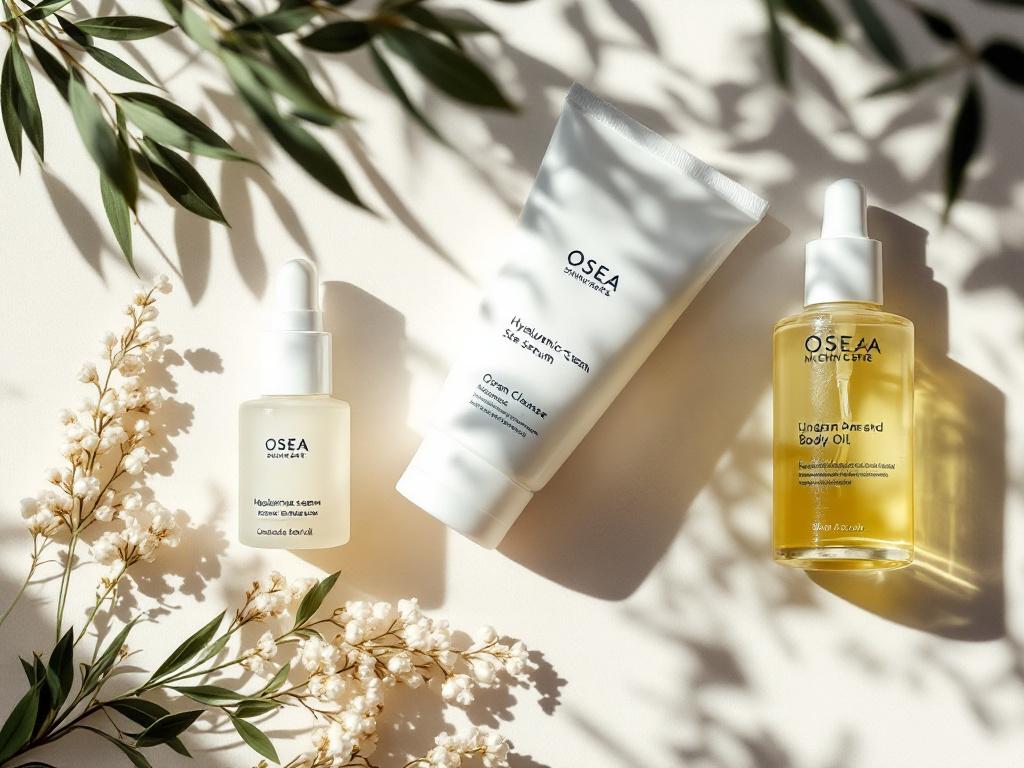
Why the Body Oil is the line's hidden standout. Undaria, sunflower, and acai oil at $48 for 5 oz works out to under $10 per ounce — competitive against any prestige body oil and outright cheap compared to single-purpose body oils from luxury lines. The use case is broad: post-shower body, hands during winter, cuticles, hair ends, and as a pre-bath treatment. The fragrance is restrained enough to layer with anything. This is the product a value-conscious buyer should reach for first if they want to test what OSEA's formulation discipline actually delivers without committing $68 to a serum.
Why SPF and mass-tier products skip. OSEA's Ocean Lotion SPF 30 at $54 doesn't outperform EltaMD UV Clear (around $41 on eltamd.com), Supergoop Unseen Sunscreen (around $38 on supergoop.com), or any mineral SPF from La Roche-Posay's Anthelios line. Buying SPF from a clean-beauty brand at a premium when dermatologist-tier options exist at the same or lower price is a category mistake. Same logic applies to the Vitamin Sea Body Lotion: any drugstore ceramide lotion (CeraVe Daily, Eucerin Advanced Repair) delivers comparable hydration for under $20.
Ingredient Reality Check
Each ingredient family below covers what it actually does, what OSEA's version offers, and where competitors deliver the same thing for less. The reasoning is grounded in established cosmetic-chemistry consensus rather than invented studies — qualitative claims only, because precision without published research is fiction.
Undaria pinnatifida (Wakame) Extract
What it does: brown-algae extract contributing polysaccharides for water-binding, trace minerals, and mild antioxidant activity. Functionally a humectant. OSEA's version is hand-harvested in Patagonia per their sourcing claims, which is vendor-stated and reasonable on its face. The honest take: the ingredient is real, the sourcing story is genuine, and performance is comparable to other algae and polysaccharide humectants. It is not a clinical-grade active. Treating it as one is where marketing creeps past science.
Hyaluronic Acid (multi-molecular weight, in the Sea Serum)
What it does: humectant that draws water to the skin's surface and into the upper epidermis. OSEA uses multiple molecular weights, which improves hydration distribution at different depths. The reality: any HA product with multi-weight HA performs similarly in isolation. The Ordinary's Hyaluronic Acid 2% + B5 (around $9 on theordinary.com) and CeraVe Hydrating Hyaluronic Acid Serum (around $18 on cerave.com) both contain multi-weight HA. The OSEA premium is not the molecule. It is the surrounding formulation — viscosity, layering behavior, scent restraint, and absence of irritants.
Squalane (plant-derived)
What it does: lightweight emollient that mimics skin's natural sebum and reinforces the lipid barrier without occlusivity. Plant-derived squalane (typically from olive or sugarcane) is the modern standard, having displaced shark-derived squalane across the industry. Biossance has built an entire brand on it (around $32 for 30 ml on biossance.com). OSEA includes squalane across multiple formulas as a baseline emollient, but it is not a brand differentiator — it is table stakes for any premium clean line.
Bakuchiol (in select OSEA products)
What it does: a plant-derived compound positioned as a retinol alternative. The honest stance: bakuchiol is gentler than retinol but slower and less proven for fine-line reduction. Use it if you cannot tolerate retinoids; do not use it expecting equivalent results to a 0.5% retinol or a prescription retinoid. OSEA's inclusion is on-brand but not unique — Herbivore's Bakuchiol Retinol Alternative Serum (around $54 on herbivorebotanicals.com) is the same category bet at a similar price.
Essential Oils and Botanical Fragrance
What it does: scent and, marginally, sensory experience. The risk: essential oils — particularly citrus, lavender, and peppermint — are among the top irritants for sensitive skin and a primary reason "clean" formulas cause reactions in people who tolerate "conventional" ones fine. OSEA's formulations are notably restrained on this front compared to brands like Herbivore or Youth To The People. This is why OSEA reads as sensitive-skin friendly despite being plant-forward. The restraint is a real formulation choice, not a marketing accident, and it is a legitimate part of the value proposition.
The ingredients in OSEA aren't doing anything that other clean brands can't replicate — what's harder to replicate is the discipline to leave irritants out and let texture do the work.
If your primary concern is brightening or dark-spot correction, OSEA isn't the line for it — readers focused on those goals should look at skin-brightening serums built around vitamin C, niacinamide, or tranexamic acid as the lead actives. OSEA's formulations are calibrated for hydration and barrier comfort, and asking them to do pigmentation work they're not designed for is the most common buyer mistake in the line.
Who OSEA Is Right For
The matrix below maps skin profile and primary goal against OSEA fit, with a better alternative named where the fit is weak. "Fit" reflects editorial assessment grounded in the formulation reasoning above — sensitive and dry skin tolerates and benefits from OSEA's humectant-and-emollient approach; acne-prone and pigmentation-concern skin needs actives OSEA does not offer.
| Skin Profile | Primary Goal | OSEA Fit | Better Alternative |
|---|---|---|---|
| Sensitive / reactive | Calm, hydrate, maintain | Strong | — |
| Dry, mature | Hydration + comfort | Strong | — |
| Dry, mature | Visible wrinkle reduction | Weak | Prescription tretinoin or OTC retinol |
| Combination | Balance, glow | Moderate | Paula's Choice for actives layer |
| Oily, acne-prone | Acne clearance | Poor | CeraVe + adapalene (Differin) |
| Oily, acne-prone | Oil control without stripping | Moderate | The Ordinary Niacinamide 10% |
| Hyperpigmentation focus | Dark spot reduction | Poor | Vitamin C + tretinoin protocols |
| Eczema-prone | Barrier support | Strong | La Roche-Posay Lipikar (clinical alt.) |
| Teen / first routine | Build a basic routine | Overkill | Simpler, lower-cost starter routine |
Three persona cases sharpen the matrix into actual buying decisions.
The Eco-Priority Shopper. Spends $80–$120 per month on skincare and prioritizes brand values alongside performance. OSEA earns the spend on the Sea Serum and Body Oil — both are products where the formulation discipline shows up in daily use, and where the sustainability story aligns with a real product the buyer is going to use up. This shopper should skip OSEA's SPF and body lotion, where the values story doesn't compensate for performance gaps against clinical alternatives.
The Sensitive-Skin Veteran. Has tried clinical brands, gotten irritation from products containing actives or fragrances they didn't expect, and retreated to gentler formulations. OSEA's restraint on essential oils, absence of denatured alcohol, and overall formulation calibration make it a genuine fit. The premium is worth it here because the alternative — repeated reactions to products that didn't disclose their irritant load clearly — is more expensive over time than buying a $68 serum that works on the first try.
The Results-Driven Investor. Wants visible change in twelve weeks: fewer fine lines, less pigmentation, clearer skin. OSEA will frustrate this person. Direct them to a dermatologist consult, a retinoid plus vitamin C protocol, or Paula's Choice's actives lineup. Buying OSEA in pursuit of clinical results is a category error, and the disappointment poisons the products that would have served them well as a comfort layer alongside actives.
Fit is the most expensive question to get wrong in skincare. Buying a $68 serum that doesn't address the skin concern actually bothering you is a worse outcome than buying a $20 product that does. If you want help mapping concerns to ingredients before you buy, AI-powered skincare matching tools can shortcut what otherwise takes months of trial-and-error spending.
The Real Cost of an OSEA Routine
Pricing reality first. The table below shows three routine tiers built from current OSEA pricing on osea-malibu.com, with monthly cost amortized assuming products last 2–4 months at typical usage.
| Routine Tier | Products Included | Approx. Monthly Cost |
|---|---|---|
| Minimum viable | Sea Serum + Atmosphere Cream | ~$35–$45/month |
| Balanced | Cleanser, Serum, Cream, Body Oil | ~$60–$80/month |
| Full line | Adds masks, SPF, body lotion | ~$110–$140/month |
Verify prices at osea-malibu.com at the time of purchase; the ranges above reflect publication-date pricing and OSEA adjusts periodically. With those numbers in hand, four sub-decisions actually move your spend.
Where the spend earns its keep. The Hyaluronic Sea Serum and the Undaria Algae Body Oil. These are the two products where OSEA's formulation discipline outperforms cheap alternatives in the finished-product qualities you actually experience daily — texture, layering behavior, scent restraint, absorption time. Everywhere else in the line, the gap between OSEA and competent drugstore or single-active alternatives narrows or closes entirely.

Where to substitute without losing meaningful performance. SPF is the easiest swap: EltaMD UV Clear or La Roche-Posay Anthelios at the same or lower price will outperform OSEA's Ocean Lotion on photoprotection. Cleanser is the second easiest: CeraVe Hydrating Cleanser delivers the same gentle, non-stripping clean as the Ocean Cleanser at roughly a third of the price, with the same dermatologist tolerance profile. Mists across any brand are a low-value category — the hydration is fleeting, the cost-per-use is high, and there's no formulation reason a mist outperforms simply reapplying serum. Body lotion is a near-direct swap to any drugstore ceramide-led option.
How to actually save on OSEA itself. Subscribe & Save on osea-malibu.com applies a recurring discount on shipments — verify the current percentage at checkout, as the rate has changed over time. Sephora's Beauty Insider sale events, particularly the Holiday Savings Event and the Spring Savings Event, apply tiered discounts to OSEA product when you buy from sephora.com rather than direct. The starter trio sample set is the lowest-risk way to test the line before committing to full sizes, and avoids the most expensive mistake in clean beauty: line completism, the urge to buy six products from one brand because the bottles match. Two OSEA products done well will produce a better outcome than six bought thin.
Two OSEA products done well will outperform six OSEA products spread thin — line completism is the most common and most expensive mistake clean-beauty shoppers make.
The honest threshold. Below roughly $40 per month, OSEA is not realistically achievable as a primary routine. Readers in that budget should build their base on Cetaphil, CeraVe, and The Ordinary, then layer in one OSEA product as a treat once the basics are working. Trying to stretch a $40 budget across the OSEA line produces a sub-therapeutic version of the routine — too little of each product, used too sparingly, evaluated too quickly — and the conclusion drawn is that OSEA "didn't work," when the real failure is mismatched budget to brand tier.
Decision Brief: Buying OSEA This Week
Eight questions, in order. Each one is yes or no. The pattern of your answers decides the call.
- Is your primary skin concern hydration, sensitivity, or maintenance — not acne, pigmentation, or visible aging?
If yes, OSEA is in the right category for what you actually need. If no, the spend redirects to clinical brands, a dermatologist consult, or single-active formulations targeted to your concern. Buying a hydration line for a pigmentation problem produces frustration on a six-month timeline. - Have you sampled the product, or are you committing blind?
Order the sample trio from osea-malibu.com first. A $68 serum is not a blind-buy purchase, and OSEA's own sample set is priced specifically to remove that risk. Skipping this step is how returns and unused bottles accumulate on bathroom shelves. - Does your monthly skincare budget realistically support $40+ on a single product without crowding out essentials — SPF, cleanser, treatment?
If no, build the foundation first. OSEA is an upgrade tier, not a foundation. A complete drugstore routine outperforms a partial premium one every time. - Are you reaching for the Sea Serum or the Body Oil — or are you reaching for SPF, mist, or body lotion?
The first two are where OSEA earns its premium against alternatives. The latter three are where you are overpaying for sustainability marketing on products that don't outperform clinical or drugstore options. Adjust the cart accordingly before checkout. - Have you checked the current price on osea-malibu.com and sephora.com side-by-side, including any active promotion?
Sephora's Beauty Insider events and OSEA's direct Subscribe & Save can shift the math by 10–20% in either direction depending on timing. Five minutes of price-checking can pay for a year of the difference. - Is your existing routine layering well, or are you adding OSEA on top of products that already conflict?
Adding a new humectant on top of an existing humectant routine is duplicative and produces no additional benefit. Replace, don't stack. The Sea Serum should displace your current hydrating serum, not join it. - Are you tolerating your current actives — retinoid, AHA, vitamin C — without irritation?
If no, OSEA's hydration layer can support a clinical actives routine and reduce the irritation barrier that's making your retinoid feel intolerable. If yes, OSEA functions as a comfort layer, not a replacement for the actives that are actually delivering visible results. Don't drop what's working to make room for what's pleasant. - Will you commit to 6–8 weeks of consistent use before evaluating?
Humectant-led routines deliver gradual, cumulative results. Anyone evaluating in week two will conclude the wrong thing — that the product "didn't work" — when the actual issue is that the evaluation window was wrong. OSEA is not a fast-acting line. Treat it accordingly.
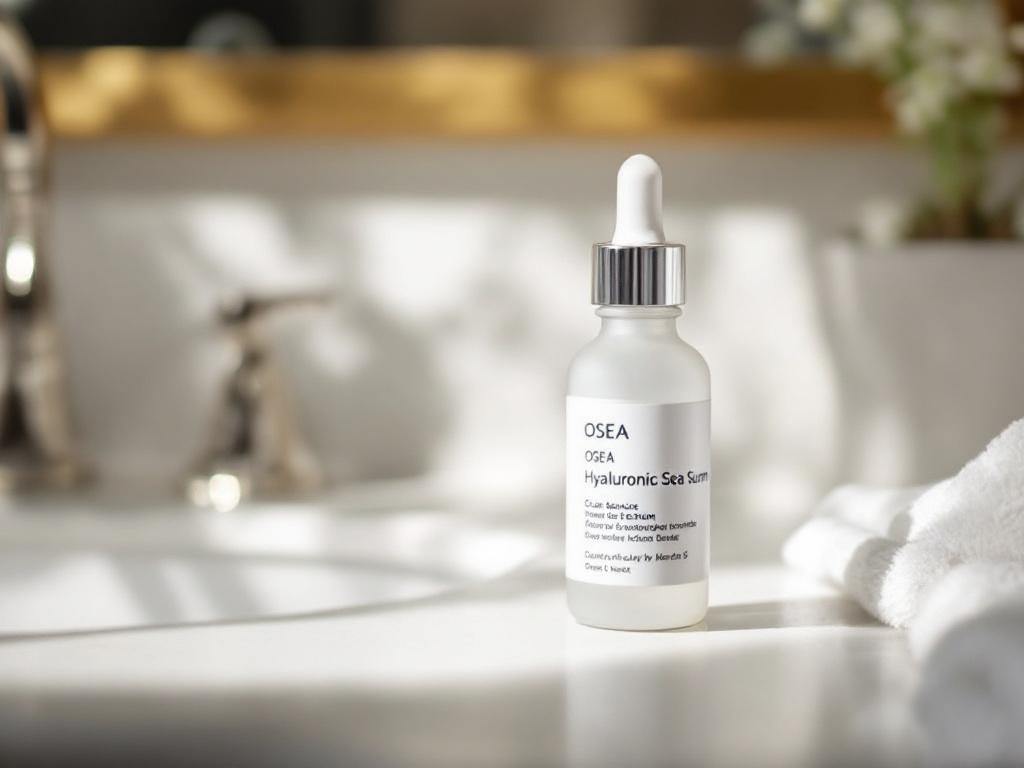
If five or more of these answers point toward OSEA, the Sea Serum is the place to start — one product, eight weeks, then reassess before expanding. If three or fewer, your money goes further elsewhere, and the honest move is to put it there.