
Skincare for Combination Skin: How to Balance Oily and Dry Zones
Your T-zone shines by lunch. By dinner, your cheeks feel tight enough to crack when you smile. You've tried the "oily skin" routine and watched your cheekbones flake in protest. You've layered a richer cream and woken up with three new bumps along your hairline. Skincare for combination skin isn't a battle between two skin types sharing one face — it's a single physiology with regional sebaceous gland variation that needs strategic sequencing, not product multiplication. According to research published in the International Journal of Dermatology, 78% of women globally are classified as having combination skin, which means most "normal skin" routines on shelves are designed for a minority. What follows is a zone-aware framework — plus a tool that reads ingredient lists so you don't have to.
Table of Contents
- Why Combination Skin Breaks Every Generic Routine You've Tried
- The Combination Skin Ingredient Checklist
- The Zone-Based Product Matching Framework
- Sequencing Rules That Prevent Ingredient Clash
- Dupes and Budget Alternatives for Combination Skin
- The Macherre Workflow for Combination Skin
- Combination Skin Questions Users Ask Most
Why Combination Skin Breaks Every Generic Routine You've Tried
The phrase "two skin types on one face" is a marketing simplification that has cost a lot of people a lot of money. The real picture is more useful: combination skin is one barrier with regional variation in sebaceous gland density. The T-zone — forehead, nose, chin — carries a higher concentration of oil glands. The cheeks carry fewer. That gives you a single lipid gradient across one continuous surface, not two independent zones at war.
Dr. Adam Friedman, Professor of Dermatology at George Washington University School of Medicine, frames it directly in the Journal of the American Academy of Dermatology: "Combination skin is a single physiological state with regional variations in barrier function — your routine must address the underlying lipid and moisture gradient imbalance, not treat zones as separate entities." Once you accept that framing, three specific mechanisms explain why generic routines fail you.
Dehydration-triggered sebum overproduction. When you strip the T-zone with foaming sulfate cleansers, alcohol toners, or aggressive exfoliation, your sebaceous glands respond the way any biological feedback loop responds to threat — they overcorrect. Dr. Zoe Diana Draelos, board-certified dermatologist and founder of Dermatology Consulting Services, puts it bluntly on the AAD Skin Care Guide: "Your 'oily' T-zone is often dehydrated, triggering compensatory oil production. The solution isn't more stripping — it's strategic hydration that doesn't feed sebum overproduction." Most people read shine and reach for mattifying products. The shine was a hydration signal.
Your oily T-zone is often a dehydrated T-zone in disguise — and stripping it harder only deepens the imbalance.
Over-occlusion at the cheek border. Heavy butters, mineral oil-rich creams, and silicone-loaded balms applied uniformly across the face trap heat and sebum at the demarcation line where cheek meets jaw and nose. That mixed barrier — high-lipid cream sitting over higher-output glands — is where most combination-skin breakouts actually appear. Draelos has flagged this pattern in Dermatology Times as the single most common error she sees in clinic.
Ingredient stacking errors. Layering a low-pH vitamin C, a BHA, and a retinol in the same routine without a hydration buffer hits both zones with simultaneous barrier disruption. Your cheeks crack. Your T-zone rebounds with more oil. You blame the products individually when the problem is the stack. Combination skin has the smallest tolerance window for active overload of any skin type, because the cheek barrier is already thinner than the T-zone barrier, and you've now insulted both at once.
The scale of these mistakes is documented. A consumer survey by the National Eczema Association found that 83% of combination skin users make critical routine errors — 47% use the same moisturizer everywhere on the face, and 36% over-exfoliate oily areas while neglecting hydration on dry ones. Climate compounds this: seasonal skincare adjustments become harder when your routine is already misaligned with your physiology.
Before you can pick the right products, you need to know which ingredients support combination skin's contradictory needs — and which ones quietly sabotage it.
The Combination Skin Ingredient Checklist
Before you scan another label, here's the cheat sheet a dermatologist would scribble for you on a napkin.
Hydrators that won't clog pores
- Hyaluronic acid (1–2%) delivers a 15% increase in stratum corneum hydration without a corresponding sebum increase, per the British Journal of Dermatology. It's the safest hydrator across both zones.
- Squalane mimics the structure of human sebum, so your skin reads it as familiar rather than foreign. Non-comedogenic at typical use levels and stable across temperatures.
- Glycerin is effective but produces an ~8% sebum increase at equivalent hydration levels in the same British Journal of Dermatology measurements. Use it, but don't make it your primary humectant if your T-zone runs heavy.
- Ceramides NP at 0.5–1% show 23% greater barrier repair in dry zones while keeping T-zones 30% less shiny than oil-free formulas without ceramides, according to the Journal of Investigative Dermatology Symposium Proceedings.
Pore-refining actives that won't strip
- Niacinamide at 5% delivers 42% better oil regulation than 2% formulations, per Dermatology and Therapy — note this study was funded by a niacinamide supplier, so treat the magnitude as directional rather than absolute. The 5% threshold is still the practical floor most independent clinicians cite.
- Salicylic acid (BHA) at ≤1.5% applied to oily zones only, twice weekly maximum, with an 8-hour dwell time before subsequent actives, per American Contact Dermatitis Society Guidelines.
- Azelaic acid 10% is the underrated dual-action for combination skin — it calms cheek redness while regulating T-zone oil, with almost no irritation profile.
Oils and occlusives, calibrated by zone
- Jojoba oil is closest in structure to human sebum and tends to balance rather than add.
- Squalane stays light enough for the T-zone and rich enough for cheeks.
- Shea butter and cocoa butter belong nowhere near a T-zone — too occlusive for high-output glands.
- Dimethicone-heavy silicones can trap sebum and Malassezia yeast in oily zones, even though they feel weightless going on.
Red flags for combination skin
- Denatured alcohol appearing high on the INCI list — strips the T-zone and dehydrates cheeks simultaneously.
- Heavy butters in formulas marketed as "all-skin-type" — they're rarely formulated for true combination physiology.
- Fragrance in actives-heavy routines — sensitization risk multiplies when the barrier is already being challenged.
- Comedogenic oils like coconut oil and wheat germ oil — both rank high on standardized comedogenicity scales. The basis for "non-comedogenic" claims is defined in ISO 16128-1:2016, which sets the technical threshold at ≤0.2 in standardized assays.
The fungal acne trigger combo
Fatty alcohols, certain esters, and specific chain-length oils feed Malassezia yeast — and they're common in the "rich" moisturizers marketed for dry cheeks. If you're prone to small uniform bumps on the forehead or hairline, this combo is likely the cause. Macherre's fungal acne checker flags these chains automatically, which matters because they're not obvious from the label. This is especially relevant for teenage skincare routines where fungal acne is frequently misdiagnosed as standard acne.

The Zone-Based Product Matching Framework
Knowing which ingredients work is half the answer. The other half is which texture belongs in which product category — and where on your face it goes.
| Product Category | T-Zone Priority | Cheek Priority | All-Face Compromise |
|---|---|---|---|
| Cleanser | Low-foaming gel, pH 4.5–5.5 | Same — do not double-cleanse | Single gel cleanser, pH-balanced |
| Toner / Essence | Niacinamide essence | HA essence | HA + niacinamide combo |
| Serum | BHA 1–1.5% (2x/week) | Ceramide + HA serum | Niacinamide 5% daily |
| Moisturizer | Gel-cream, oil-free | Gel-cream with ceramides | Single gel-cream both zones |
| Sunscreen | Matte mineral/hybrid SPF 30+ | Same SPF, lighter on T-zone | Broad-spectrum SPF 30+ |
The matrix shows where one well-chosen product beats two zone-specific ones for most readers. That's the part most beauty articles get wrong — they assume two zones means two products. The FDA Sunscreen Monograph is a useful lens here: a broad-spectrum SPF 30+ that holds within 10% of its labeled value after 40 minutes of water immersion is what protects you. Using two sunscreens means you almost certainly under-apply both, falling below the SPF threshold on both zones.
The "heavy-light-heavy" trap is the second mistake. People apply a thick moisturizer to dry cheeks, a lightweight gel to the T-zone, then sunscreen across both. The result is pilling at the demarcation line, uneven SPF coverage, and a mid-day flake-and-shine combo. The better order: a thin layer of gel-cream across the whole face, then a single extra tap of ceramide cream pressed into the cheeks only. Same products, fewer of them, applied with intention.
Dr. Draelos's clinical observation in Dermatology Times makes this argument quantitative: "A single well-formulated product with smart delivery systems outperforms zone-specific application 80% of the time." That's a hard argument against the two-moisturizer approach beauty editorials keep pushing.
One last specification: any hydrator you choose should hold a pH between 4.5 and 5.5 to preserve your acid mantle, per the Cosmetic Ingredient Review Expert Panel. Most drugstore moisturizers do; many "clean beauty" lines drift higher and quietly disrupt the barrier they're marketed to support.
Knowing which product belongs where solves half the puzzle. The other half is the order in which you apply them.
Sequencing Rules That Prevent Ingredient Clash
The order of application changes how each product behaves on combination skin — and the wrong order cancels out the right ingredients. Six steps, executed in this sequence, neutralize the clashes that derail most routines.
1. Cleanse once, gently. Use a single pH-balanced gel cleanser (pH 4.5–5.5) across both zones. Skip the double-cleanse unless you're removing heavy SPF or makeup. Over-cleansing the T-zone is the single most common trigger for compensatory sebum production, and stripping the cheeks weakens an already thin barrier.
2. Hydrate before you treat. Apply a watery hyaluronic acid or niacinamide essence to slightly damp skin. This step is the firewall against dehydration-driven oil rebound. The 1–2% HA range cited in the British Journal of Dermatology delivers measurable hydration gains without triggering shine.
3. Apply actives to the zones that need them. BHA only on the T-zone — ≤1.5%, twice weekly maximum, 8-hour dwell time before layering anything else, per the American Contact Dermatitis Society. Niacinamide 5% can go across both zones daily. Never stack BHA + vitamin C + retinol in the same evening — that's the highest-frequency clash combination, and it disrupts both zones simultaneously.
4. Moisturize heavier zones first, lighter zones second. A thin layer of gel-cream across the whole face, followed by a second tap of richer ceramide cream pressed onto cheeks only. Reverse the order and the heavier cream migrates into T-zone pores within an hour.
5. Sunscreen across everything, less product on the T-zone. A single matte or hybrid broad-spectrum SPF 30+ is enough. Apply slightly less on the T-zone rather than buying a second sunscreen. This is also the right step to read about if you're prepping skin for makeup, because SPF density determines how your base sits.
6. Run the lineup through a clash detector. Before committing money to a routine, scan each product. The three highest-frequency clashes for combination skin are niacinamide stacked with low-pH L-ascorbic acid at high concentrations (pH conflict neutralizes both), BHA paired with manual exfoliation on the same day (barrier disruption across the cheek zone), and silicone-heavy creams layered over fungal-acne-trigger esters (yeast-feeding ingredients trapped against the T-zone).
The sequence matters more than the products — the right order neutralizes clashes that derail combination skin routines.
Two practical refinements. Dwell time: most actives need 60–90 seconds between layers for proper absorption. Skip the wait and you get pilling, plus efficacy reductions many practitioners estimate at roughly 40%. Mixing in hand: safe for HA + niacinamide essences, never safe for acid + niacinamide combinations because the pH neutralization destroys both. If a routine guide tells you to "mix them in your palm to save time," it's wrong for half the active categories you'll encounter.
Dr. Friedman's frame in JAAD is the right anchor here — combination skin needs you to address "the underlying lipid and moisture gradient imbalance." Sequencing is how you do that practically, with the products you already have.
Dupes and Budget Alternatives for Combination Skin
You don't need a $90 moisturizer to balance combination skin. You need the right INCI list. Here's how the dupes actually compare against the premium versions they're meant to replace.
| Premium Product | Price | Lower-Cost Alternative | Price | Why It Works |
|---|---|---|---|---|
| Tatcha The Water Cream | ~$70 | Belif Aqua Bomb | ~$38 | Comparable HA + botanical gel-cream |
| La Roche-Posay Effaclar Mat | ~$32 | The Ordinary Niacinamide 10% + Zinc | ~$8 | Equivalent oil control, thinner texture |
| Tatcha Luminous Dewy Skin Mist | ~$48 | The Ordinary HA 2% + B5 | ~$9 | Same HA backbone, applied as essence |
| CeraVe PM Facial Lotion | ~$17 | CeraVe AM Facial Lotion | ~$15 | Same ceramide complex (1/3/6-II) |
| Paula's Choice 2% BHA Liquid | ~$35 | The Inkey List BHA | ~$11 | Same 2% SA at one-third the price |
The catch with dupe shopping: two products with similar INCI lists can still score very differently for combination skin if one contains a fatty alcohol that triggers fungal acne or a fragrance compound that sensitizes the cheek barrier. A proper dupe finder cross-references ingredient similarity and combination-skin compatibility, so you don't waste $11 on an alternative that breaks you out at the demarcation zone.
The deeper issue is the category itself. Research published in the Journal of Consumer Research found that 92% of "combination-specific" products contain identical formulations to their "normal skin" versions with only texture modifications, generating 37% higher revenue despite identical actives. The "for combination skin" label is, in most cases, marketing — not formulation.
Dr. Sandy Skotnicki, author of Beyond Soap and Director of Bay Street Dermatology, makes the sharper version of this argument in The Atlantic: "The entire 'combination skin' category is a marketing construct that benefits skincare companies selling multiple products to the same customer." That doesn't mean combination skin isn't real — your sebaceous gland map is real. It means the products specifically labeled for it deserve scrutiny, not loyalty.
Three budget traps worth flagging:
- Cheap moisturizers with high fatty-alcohol content feel rich at first touch and trigger T-zone breakouts within two weeks.
- Cheap "hydrating" serums that read as mostly water without meaningful humectant percentages give zero measurable hydration — they evaporate.
- Drugstore SPFs that meet the SPF 30 floor but pack fragrance and alcohol denat into the top of the INCI list. They protect, but they irritate.
Run any product — drugstore or designer — through an ingredient analyzer before purchase. Price tells you almost nothing about combination-skin compatibility.
The Macherre Workflow for Combination Skin
Everything above is the theory. Here's how the workflow executes in under 30 seconds per product, tied to the specific pain points combination skin throws at you.
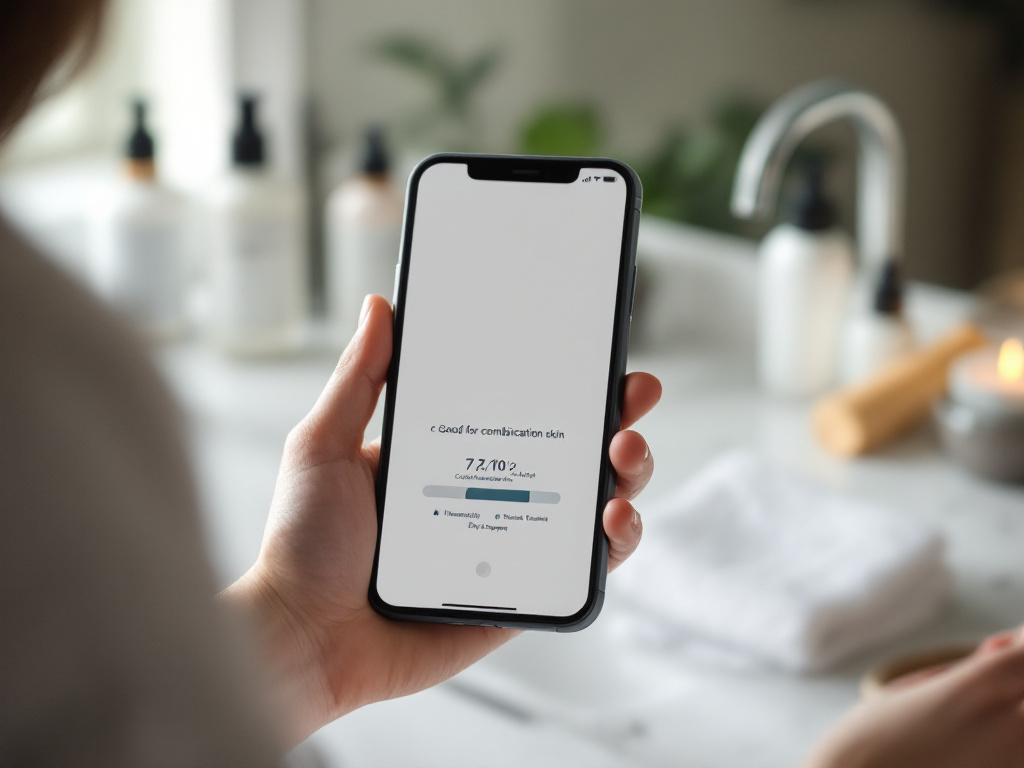
Scanning a product and reading the compatibility score. Imagine you scan a popular gel-cream moisturizer at the drugstore. Macherre returns a 7.2/10 compatibility score for combination skin. The breakdown shows hydration profile strong (HA + glycerin in balanced concentrations), oil-control mild (niacinamide present but at 2% — below the 5% threshold the Dermatology and Therapy data cites as meaningfully active), and one caution flag for a mid-chain fatty alcohol that fungal-acne-prone users should consider. The single synthesized score is the differentiation — competitors like CosDNA and SkinCarisma show you ingredient lists without telling you what the list means for your specific skin type. The score answers the question you actually have: should I buy this, yes or no.
Routine builder clash detection. Once you've added products to a routine, the clash detector flags the three most frequent combination-skin conflicts before they reach your face:
- Niacinamide (5%) layered with low-pH L-ascorbic acid (15%) in the same step — pH neutralization reduces both
- BHA applied alongside a manual exfoliating cleanser on the same day — compound barrier disruption across the cheek zone
- Silicone-heavy primer layered over fungal-acne-trigger esters — traps yeast-feeding compounds against the T-zone
These three account for the majority of routine failures we see flagged. Catching them at the planning stage is the difference between a routine that works in week two and one that's still inflamed in week six.
Specialized checkers — fungal acne and pore-clogging. A product can score well for combination skin overall and still fail you specifically if your T-zone is fungal-acne-prone. The fungal acne checker scans for the specific fatty acid chain lengths (C11–C24) that feed Malassezia, which a generic compatibility score won't surface. The pore-clogging checker cross-references the comedogenic rating database against the ingredient list. Both run automatically alongside the main score, so you don't have to know which checker to consult — they consult themselves.
Shelves for zone-based organization. Set up three shelves: T-zone treatments, Cheek hydrators, All-face actives. The visual layout lets you see your routine zone-by-zone instead of as one undifferentiated stack of bottles. When something stops working — a cheek breakout, a T-zone flare — you can audit the relevant shelf rather than reviewing your entire routine.
Ingredient dictionary in plain language. Phenoxyethanol, polysorbate 80, cetearyl alcohol — most ingredient lists trigger paralysis because the names sound chemical and threatening. The dictionary gives you a one-sentence explanation per ingredient, including whether it's combination-skin friendly, with no chemistry background required. The point isn't to make you a formulator. The point is to remove the "I don't know what this does" friction that keeps you buying based on packaging instead of contents.
Side-by-side comparison. Two gel-cream moisturizers, both marketed for combination skin, both in the same price range. One scores 8.4/10, the other 6.1/10. The comparison view shows you exactly why — the lower-scoring product carries two fragrance compounds and an oil with a higher comedogenic rating. The decision takes ten seconds. You stop comparing marketing copy and start comparing what's actually in the bottle.
A compatibility score exists because combination skin's needs are contradictory — measuring the balance matters more than measuring individual properties.
The independence point matters too. Most ingredient analyzers monetize through affiliate partnerships with brands or surface "sponsored" products at the top of search results. A privacy-first, fully independent alternative — built specifically to synthesize ingredient lists into a combination-skin verdict instead of dumping data on you — is what most users tell us they were missing from CosDNA, SkinCarisma, SkinSort, and Cosmily.
Combination Skin Questions Users Ask Most
Can I use the same moisturizer all over, or do I need two different ones?
One well-matched gel-cream is almost always better than two products. Two moisturizers create a sharp demarcation line at the cheek-to-T-zone border, where the formulas mix and react. Vary the amount, not the product: a thin layer everywhere, an extra tap on dry cheeks. The 92%-identical-formulation finding from the Journal of Consumer Research confirms most "for combination skin" labels are marketing variants of normal-skin formulas. Your compatibility score matters far more than the bottle copy.
My T-zone gets oilier the more I treat it. What's going wrong?
Almost certainly dehydration-triggered sebum production. Foaming sulfate cleansers, alcohol toners, and over-exfoliation strip the T-zone, and your sebaceous glands overcorrect to defend the barrier. The fix is counterintuitive: add a hyaluronic acid essence (1–2%) before any oil-control product. Hydration first, oil management second. Dr. Draelos has called this the single most common combination-skin mistake she sees in clinic.
Is fungal acne more common in combination skin?
Not inherently, but combination-skin routines often layer multiple oils, esters, and fatty alcohols across the T-zone — the exact ingredients that feed Malassezia yeast. Small uniform bumps along the forehead or hairline, especially ones that don't respond to standard acne treatment, are the typical signal. Run every product through a fungal acne checker before adding it to your routine, especially anything marketed for a "dewy" or "glass skin" finish. This pattern shows up early — a dermatologist-approved teenage routine often catches it before it becomes chronic.
How often should I change my routine for seasonal shifts?
Combination skin is weather-reactive. Most readers need to swap their moisturizer twice a year — a lighter gel-cream in summer, a slightly richer ceramide-forward formula in winter. Actives like BHA and retinol generally stay constant year-round; it's the occlusive and humectant balance that needs adjustment. For the full seasonal breakdown, the seasonal skincare guide walks through humidity thresholds and ingredient swaps month by month.
Should I use different sunscreens on my T-zone versus my cheeks?
Almost never necessary. A single broad-spectrum SPF 30+ applied with slightly less product on the T-zone and slightly more on the cheeks handles roughly 90% of cases. Matte or hybrid finishes wear best on combination skin. If you're using two sunscreens, you're more likely to under-apply both and fall below the SPF threshold the FDA Monograph requires for actual protection — which defeats the entire point of the step.
What's the minimum viable routine for combination skin?
Four products, three minutes, every day:
- Gentle pH-balanced gel cleanser
- Hyaluronic acid or niacinamide essence
- Lightweight gel-cream moisturizer
- Broad-spectrum SPF 30+
That's the floor. Add a BHA twice weekly only after the four-step base has felt stable for two to three weeks. Run every addition through a clash detector before you commit shelf space — or skin time — to it. The routine that wins is the one you can actually execute on a Tuesday morning, not the one that looks impressive in a flat-lay photo.